Once upon a time, I supported legalizing all drugs, freeing Mumia, raising the minimum wage to fifteen dollars an hour, etc. Then Trump won in 2016, and if the electorate loves someone like him, then why bother? So I stopped caring. And I started actually paying attention to my job as senior content provider for WebFresh International. Soon I made a fortune when I created that Luvcats series of e-books in which humans bang human-feline hybrids: Purrfect Lover, Gettin’ Some Tail, Grab ’em by the Pussy, etc.
Anyway, I doubt Biden will change anything. Sleazy escapism always remains in vogue.
The night I turned eighteen, in 1984, I was at some party, drunkenly celebrating my newly-arrived adulthood, when I beat the crap out of some Greek (as in fraternity member) from high school because he’d said my favorite band, those heavy-metal retards Skorchin, “suck donkey dick.” Five years later, during my first stint in AA, out of a twelve-steppish desire to make amends, I visited him (he still lived in town) to apologize. “Forget about it,” he said. “I love that band now. Can you fuckin’ believe it?” I fuckin’ could. Sometimes it takes time for people to appreciate retardedness.
After years of playing coffeehouses and regattas, the female alt-rock band Bitchfork scored its biggest hit ever, when the band’s 1998 song “Here Chicky Chicky” appeared on the soundtrack of that direct-to-streaming, Nineties nostalgia movie Lamestain. The residuals that Bitchfork’s lead singer and sole original member Tessa McQuade earned from writing that song helped pay for her eighty-one-year-old grandfather’s funeral. She’d never liked him, but she thought he deserved something for dying a particularly nasty death from COVID; she’d seen him wheeze like a porous accordion via Zoom as he lay in his hospital bed. Survivors’ guilt: the other pandemic.
A truck sideswiped a convertible one warm, rainless night, killing the convertible’s driver instantly. (The nonunionized trucker had fallen asleep behind the wheel after eighteen straight hours driving to meet a strict deadline for delivering overpriced consumer goods to various high-end department stores, such a literal deadline indicative of the destruction of organized labor and of the corporate world’s valuing profits over employees, including the employees who had manufactured those consumer items overseas for subsistence wages under dangerous conditions.) I suppose we need a human-interest angle here. The convertible’s driver, Jonathan Perrin, thirty-nine, liked watching superhero movies on his computer.
One night five years ago, after getting drunk at some bar, the bros and I walked up the street to a tattoo parlor, where we had our left biceps inked with the logo of Skorchin, that lame Eighties band we’d listened to in high school during the 2010s. Only, on me, that jagged, fiery, metallic-lettered logo ended up looking like a smudgy SKOBCHEN. Today, the tattoo serves as an entertaining story, turning me into a character, someone with no aspirations beyond partying. But I did have aspirations once—investment-company aspirations. That messed-up tattoo must have engulfed them, sci-fi style. Eerie.
She refused to admit she’d received botched collagen implants. “They look fine to me,” she contended, even though her lips now looked like squashed candy apples. No, her lips now looked like elderly beanbag chairs. Her lips looked like bloody, chubby larvae. God, I hate writing sometimes, though I still love her, despite her saying “Well, your face sucks. You have skin tags so large, they sway back and forth on windy days.” When I said “Yes, my face does suck, but not ’cause I paid to have it disfigured,” she emitted a loud wail that sounded like—sounded like—
A genuine video that the genuine fast-food chain Rax made to promote their genuine spokesperson.
During a break from work today, I read another great article on my favorite pop-cultural website, Detritus Valley—an article titled “Dickety-Dee-Pressing” and written by Jordan Bicks, the woman who runs the site all by herself, and on whom I have a slight crush, despite (or maybe because of) having never met her or seen her photo. She dee-scribes about how in 1992, the restaurant chain Rax (FAST FOOD WITH STYLE, its signs said), wanting to appeal to adults, introduced a cartoon spokesperson named Mr. Delicious: a balding, bespectacled, bow-tied, black-and-white white guy—a real schlub, in other words. I’d never heard of him until reading this article, though I’d eaten dinner there once during that time, when I was ten, with my parents and siblings, on vacation one July in Aurora, Ohio, after our family had spent the day at the now-dee-funct and super-cheesy amusement park, Geauga Lake; from what I can remember, Rax, or at least that particular one, didn’t display much style but did feature a salad bar so large, it had its own zip code, though I think I ate just a roast beef sandwich instead, having adopted my family’s meat-centric diet, though I would somewhat insufferably embrace vegetarianism not long after, more out of rebelliousness than out of any genuine concern for non-human creatures; that dietary choice would last maybe two months. (Actually, it didn’t really last at all, since from the first day I kept sneaking chicken nuggets and fish sticks.)
So anyway, the article links to actual TV and radio commercials featuring Mr. Delicious, and I agree with Jordan when she contends that “these links (and Candy Crush) more than justify the existence of digital computer technology.” Referring to himself in the third person, calling himself Mr. D (also printed on the briefcase he carried everywhere), he would praise Rax’s “adult-sized delectables for only ninety-nine cents” while morosely talking about adult topics such as “being a little overextended” because “perhaps the Rax executives aren’t paying him enough to compromise his integrity”; suffering from a hangover due to “two for one night at the Rusty Anchor”, thus forcing him to “avoid the wrath of Mrs. Delicious”; getting expensive therapy that kept his “hostility all locked up” but just barely, I would say; undergoing “rather delicate surgery” of an unspecified nature; and “still trying to recover from that bout with midlife crisis in ’89” that had involved “custom-designed hair weaves” and “that vacation he took to Bora Bora with those two young”—pause—“friends that left Mr. Delicious feeling empty and unfulfilled”. I wonder if Mrs. Delicious had accompanied him.
Each ad would end with his catchphrase, “Dickety-Dee.” Why the hell not?
As Jordan put it in her article, “Hey, Madison Avenue: if you want an ad campaign to succeed, maybe, just maybe, it shouldn’t make viewers want to slit their wrists.” Needless to say, Mr. Delicious flopped bigtime, and Rax soon declared bankruptcy. Ha ha, just more media crap to provide ironic amusement for sophisticates.
But really pay attention to the ads, and you’ll soon learn that, unlike actual schlubs, advertising executives can have their midlife crises in public, so to speak, and presumably get paid a fortune for it. And you can bet aging, bitter white guys wrote those ads. Either that, or young, clueless white guys, maybe super-ironic Gen-Xers, wrote them. Or both types of white guys did. Whoever did, they maybe inadvertently reminded us that immaturity rules, until it abdicates its throne, and you realize that whatever your race or gender or sexual orientation or need for corrective lenses, time will eventually Dickety-Dee you—a banal thought, everyone grows old, though first-hand experience makes that thought seem far more intellectually substantial, not that you necessarily need decades of experience, as I’ve had, to understand anything; I like to imagine Jordan’s in her late twenties or early thirties but has the maturity, insight, and knowledge of an ancient sage.
It’s coincidental that Flasher 76 deals with liberty. Get it?
You wanna know what excuse Benwick gave, during the Zoom meeting, for submitting those estimates an hour late? You really wanna know?
He said he’d gotten the Liberty Mutual jingle stuck in his head and needed to walk outside a while to, as he put it, “reset.” Snickering as he told us. Not even apologizing for the inconvenience he’d caused.
He should have gotten fired long ago, but being both the owner’s son-in-law and a wannabe comedian has certain privileges, such as getting away with doing stand-up routines on the job. Freaking COVID didn’t close every comedy club after all.
Better than the first Trump-Biden debate, or the movie version of Cats, or your first sweetheart.
Everything you liked as a kid sucked. Everything. Don’t tell me you liked, say, the Alice in Wonderland books, or classic Hollywood movies, or old-school hip-hop. As a suburban kid in Nowhere USA, you liked the same lame cultural products that your peers did; you’d even quote TV-commercial catchphrases to flaunt your sophistication.
You should revel in your past averageness, a badge of honor for you and other self-proclaimed sophisticates. “Heh heh, you wouldn’t believe the crap I used to watch!” Or read to listen to or create. A past membership in normal society at least gives you a past.
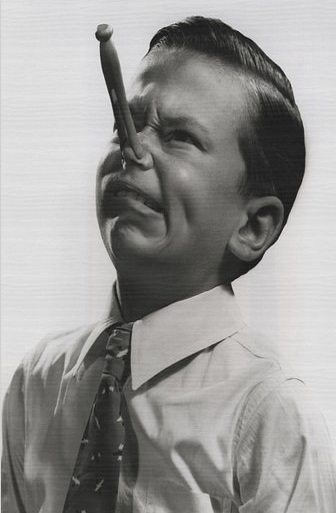
His COVID unemployment having run out, no jobs available anywhere, desperate to continue paying his exorbitant expenses (perhaps he shouldn’t’ve moved to such an expensive place as Brooklyn, but he couldn’t resist the siren call of coolness), he installed a live streaming webcam in his bathroom and charged viewers a hundred bucks an hour to watch him sit naked in his bathtub, a bathtub filled with cooked oats (“Gluten-free,” he proudly told everyone watching), and read War and Peace aloud in its entirety. He got to page forty-seven before calling it a day. As it turned out, not enough people love idiotic Internet stunts, at least not enough to earn him the money he needed. So the next day, he urinated and defecated into the oatmeal, then sat in it naked, clamped his nose shut with a clothespin, and continued reading that novel aloud, reaching page ninety-seven, attracting more views but still not enough. The day after that, once again naked and nose-clothespinned, his copy of War and Peace nowhere in sight, he urinated and defecated into the oatmeal, sat in it, scooped up a heaping spoonful of the resulting mixture, lifted the spoon an inch from his mouth, faced the camera, said “Down the hatch!”, shoved the spoon into his mouth, chewed, swallowed, vomited copiously into the tub, scooped up a heaping spoonful of the new mixture, lifted—
For years afterward, footage of what the snarksters would call The Gourmet Feast would remain an Internet staple, the vomiting scene getting memed to refer to something the current president has said or done; or to the most recent best-picture Oscar winner; or to some particularly outspoken feminist; or to the idea of considering a particular race, ethnicity, or sexual orientation deserving of civil rights. In a sense, the Gourmet, as he would slightly-buzzedly put it to hot young guys at the bar, had lived through his own Vietnam, 9/11, and pandemic combined and now knew he could survive any calamity, either one he has caused himself or one brought about by “those darn haters.”







 DAVID V. MATTHEWS