To Recalibrate

A toned-down excerpt from “Our Putative Couple,” a work in progress.

One drizzly Friday afternoon several weeks before the 2024 United States presidential election, twenty minutes and seventeen seconds into our putative couple’s first visit, either together or separately, to the airport development district’s newest cultural venue, the Kinnick Museum of American Folk Art, the abovementioned couple starts staring at an anonymous painting, Peaceable Kingdom (circa 1860s, oil on canvas, 36.5 inches by 48 inches [92.7 centimeters by 121.9 centimeters], collection of BXR Funds International), that shows a dog, a cat, a hen, a rooster, an eagle, a bluebird, a turkey, a lion, a lamb, a cow, a bull, a bear, and a giraffe all standing in a field and grinning queasily at the viewer. “I don’t know about you, but I love the color scheme,” Brody Waters, our putative couple’s cisgender white male component, age forty-two, a poet/creative writing instructor at Swensen College, says about the work’s dingy, gritty pastels. “It reminds me of depressed cotton candy. No, actually, it reminds me of depressed cotton-polyester blend candy. Artists back in the olden days loved tints and hues and whatever that didn’t require ironing.”

“I like the colors too,” says Cassie Flanagan, our putative couple’s cisgender white female component, age thirty-nine, a trend forecasting analyst at Mattercomp, “but do you know what I like a little more? How the creatures all have dilated eyes. A super new dispensary must have opened in the neighborhood.”

“Yeah. Bambi needs some wacky tobacky, stat. Who wouldn’t, if you lived in a Disney cartoon?”

She chuckles.

Our putative couple continues staring at the painting.

An hour, twenty-seven minutes, and forty-three seconds later, they stand outside the museum.

“What a rewarding cultural experience,” Cassie says.

“Yes indeed. I never thought scrimshaw could cause such a frisson of excitement in me,” Brody says, loudly pronouncing that French word as “freeee-sooohn.”

“Ooh la la.”

Pause.

“So you want to attend that concert tomorrow?” he asks.

“No thanks,” she answers.

“How about a movie?”

“Nope.”

“What would you like to do?”

“Uhhh—actually, I’d like to spend the day by myself tomorrow. To recalibrate?”

“To recalibrate?”

“Yup.”

“Recalibrate from what?”

“From everything.”

“All right.” He pauses. “How about Sunday?”

No response.

“Monday? Tuesday? Any day?”

No response.

“Exactly how much time do you need to recalibrate?”

“I don’t know. I’ll call you, okay?”

Longer pause.

“If you recalibrate too much, you’ll go blind,” he says.

She chuckles.

Brief pause.

“So, uh, I guess I should go now,” she says.

“You want a ride?” he asks.

“Thanks, but I’ll walk. I need a good walk.”

“So do I. Maybe I’ll have one someday.”

She chuckles.

Another brief pause.

“Well, uh, bye,” she says.

“Bye,” he says.

They walk off in opposite directions.

Two years later, Brody has his first novel published, Livin’ la Vida Locher (304 pages, paperback, Quarto House Press, US $21.99 [Canada $30.00]), whose title paraphrases “Livin’ la Vida Loca,” the 1999 hit by Puerto Rican singer Ricky Martin. The novel deals with a white, cisgender, forty-six-year-old man named Larry Locher, a cultural studies instructor at Gunderson University, who has a brief affair with one of his graduate assistants, Jazmín Torres, a transgender legal immigrant half his age from somewhere unspecified in Central America. As a result of what the novel’s free indirect narrator calls the “hashtaggers (more like trash-haggers—those pests don’t deserve a wittier label)” and the “cancel crowd who’ve cancelled growing the hell up,” Locher loses his job; and his white, cisgender, thirty-nine-year-old wife, Connie Dean-Locher, a trend forecasting analyst at Mastercorp Technology “who pretty much PMSes twenty-five hours a day, eight days a week,” divorces him, taking fifty percent of everything; and Jazmín, who more than once told him “Steeck jour beeg white deeck eenside me, pronto!”, writes Honor Roll, a best-selling, thinly-fictionalized novel about the affair, whereas he cannot get started on his thinly-fictionalized, affair-related novel, What REALLY Happened, because “his ex-wife and his ex-mistress must have sucked the life out of him but not through that certain beeg appendage of his, unfortunately”; and “one of the world’s most popular streaming services, Mango Deluxe,” adapts Jazmín’s novel into a limited series, that service’s most popular offering ever, inspiring “a million memes on the young people’s favorite social media platform, DingDing (and judging from those memes, the young people’s brains must have shrunk in the wash, as that renowned social critic, Gage Cutter [from Cutter’s Law, a 1994 American action movie], would put it)”; and Jazmín and Connie start a romantic relationship, announcing their status via the latter’s account on “that platform for formerly young people, Sunnyday,” via a close-up, sepia-filtered photo of them kissing, with the caption RELATIONSHIP STATUS: TAKEN ✓; and worst of all in Locher’s opinion (or maybe best of all, considering the readers’ proclivities), he can get aroused only when “self-abusing” to fantasies of those two women “humping up a storm.”

Livin’ la Vida Locher receives laudatory reviews both online and in that retro medium, print.

  • “Waters proves adept at sculpting prose.”—Thomas Woo, pitchingwoo.com
  • “At last, a one-stop source for political incorrectness.”—dripnose2008, litfreek.com
  • “This ripped-from-the-headlines novel not only rips up the headlines, it might also rip you a new one.”—Addison Andrews, The Neater Reader

However, Olivia Purcell, in her weekly wordgasm.com column, Purcellular, calls Livin’ la Vida Locher “the worst release yet from that legend in his own mind, the poetaster Brody Waters[,]” who “has really, truly outdone himself this time in the cringe department while adding heaping helpings of MAGA-capped bigotry”; he “obnoxiously” wants readers to sympathize with the white male protagonist, “an aging Gen-Xer who quotes pop culture from the 1990s while going up against deranged, all-powerful enemies: feminists, brown people, immigrants, gays, lesbians, the transgender, Democrats, and—most heinous of all—anyone who quotes pop culture from past the year 2000.” She concedes this novel “has one redeeming quality: the almost-clever names Waters gives his off-brand equivalents of Apple Plus, TikTok, Bluesky, Pornhub, Grindr, et cetera.” But “that still can’t salvage a book even Chad Chaddington would find malodorous. (Though Waters refers to ninety trillion ’90s TV characters, he doesn’t mention his probable role model, Chad, once. To quote a popular hit song from that decade, how bizarre [a reference to “How Bizarre,” a 1995 single from the New Zealand group OMC].)”

Brody can usually shrug off negative reviews. At least they provide a change from the nonstop adoration he receives, not that he hates nonstop adoration, heh heh heh heh heh. But this hatchet job—

He knows Olivia Purcell, white, cisgender, thirty-eight, a presence in airport development district literary circles. He’s run into her over the years at readings, art openings, chamber-music concerts, and other cultural events. “Hey,” she says with a vacuous smile. “Hey,” he replies similarly. They exchange small talk for no more than half a minute, say “Bye” (sometimes he says “Ta-ta”), and part company; otherwise, they have zero contact, though he does hate-read her column every week, to find out what she’s praised or (far more often) what she’s premenstrually eviscerated. She has horrible taste, preferring virtue-signaling pabulum over more intelligent, more challenging fare. Typical book critic—she wouldn’t recognize good writing even if it did the Achy Breaky dance on her face. (He’ll have to remember that line for a future project.)

But perhaps that airhead he’d dated for maybe five seconds a few years ago, Cassie, uh, Cassie Flanagan, had something to do with that review. Both women had attended the same vaguely prestigious school, Garnetville University, together two decades earlier and (at least when he knew Cassie) still kept in touch, having friended each other on Facebook and even occasionally hanging out in person. Cassie might have told her that an insensitive, un-woke poet she’d dated for maybe five milliseconds a few millennia ago had released his first novel; perhaps Cassie had given her a copy. Thanks, Cass.

Copyright © 2026 by David V. Matthews

More 2000s Content and—What? You’re STILL Pissed off about the Sopranos Finale?

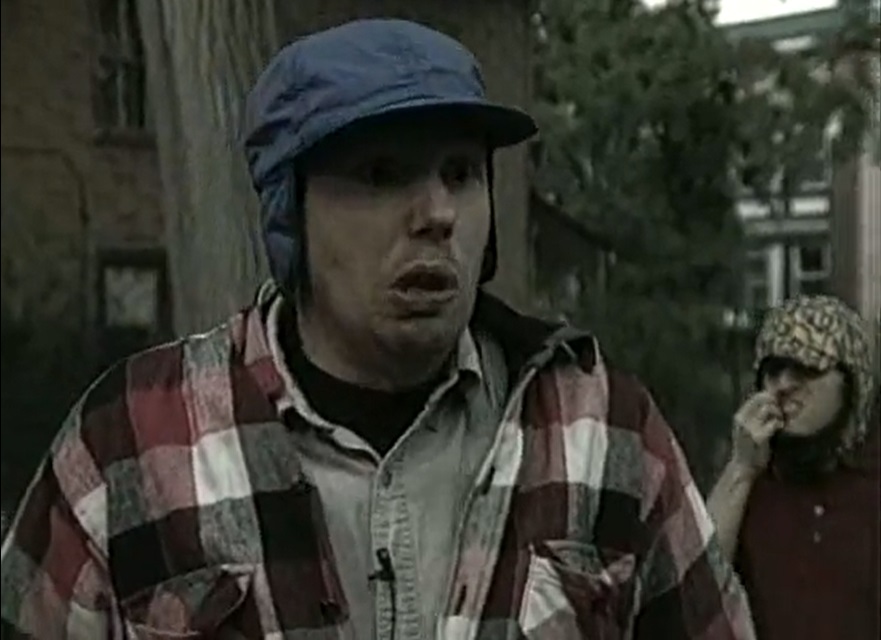
Two skinny (and dapper) white guys, from Not Very Factual: DVM Meets John Waters.

Americathon: The Worst Fotonovel™ Ever?, February 26-March 2, 2001 (revised June 5-6, 2023)

Enduring Rehash?, September 21-23, 2001 (revised September 27-29, 2001)

Not Very Factual: DVM Meets John Waters, July 9, 2005

Three Unfinished Pieces

December 1, 2012

In 1974, the film critic John Simon wrote that “American movies in general, and recent ones in particular,…do not (cannot? dare not?) cope with serious, contemporary, middle-class, adult problems.” The typical American movie “deal[s] with the western frontier, the historical past, some war or other; with the criminal classes, occasionally spies, possibly even law enforcers; more rarely with the lives of famous people (rarer nowadays, when the common man is more in than ever); and now and then lovable prostitutes, impoverished blacks, or exploited Indians.” Almost “every notable American film is a genre film, a frothy little comedy, or a specialty number” that says nothing noteworthy about “middle-class living[,]” implicitly non-black or non-Indian, apparently.

Today, after decades of accelerated income inequality due to free-market fanaticism (even that alleged far-left radical Obama has drooled over the free market), corporate domination over everything (including the movies), and Republican reverence toward the rich, the American middle-class has virtually vanished, replaced by either one-percenters or the people who earn minimum wage cleaning the one-percenters’ toilets; thus, why should Hollywood bother depicting a life not too many members of the prime movie-going audience (adolescent males and adults of any age with adolescent-male mentalities) have ever experienced? Hobbits are more realistic nowadays than the breadwinner who can earn enough each month to support his or her family and have a little left over to save for retirement. Movie audiences don’t like reminders of their powerlessness, instead preferring (or convinced by media indoctrination that they prefer) blinged-out, kick-ass fantasies with plenty of blood squibs and fiery explosions. Westerns may have gone out of fashion, but period pieces, war, and crime still dominate the cinematic imagination, with occasionally the dysfunctional lives of famous people, usually well-merchandised, classic-whatever-genre singers. The “common man” has turned into a pumped-up, violent action hero cavorting in front of green screens; “lovable prostitutes” now have buff figures and can slaughter as many bad guys as the uncommon man can; “impoverished blacks” have ditched the impoverishment angle in favor of firearms and wisecracks; and “exploited Indians” have vanished, replaced by Muslim terrorists.

Simon’s preference for the “serious adult film” now seems quainter than the Constitution.

August 23, 2013 (last paragraph slightly revised February 17, 2021)

Peter Frank and Michael McKenzie. New, Used & Improved: Art for the 80’s. New York: Abbeville Press, 1987.

Anyone who wants to get rich will try doing so by making specific career or financial choices, especially during an era that venerates wealth, status, and ostentatiousness more than usual—an era such as the Reagan era, the Nineteen-Eighties, also known as the go-go Eighties, as in wake me up before you go-go walking past those homeless guys sleeping on the sidewalk.

Peter Frank and Michael McKenzie’s book New, Used & Improved: Art for the 80’s offers a glossy, well-illustrated chronicle of New York City’s hipper-than-hip art scene during that decade. However, amid all the details about painters, sculptors, photographers, graffitists, musicians, performance artists, nightclub designers, gallery owners, and “thespian andogynes[,]” the authors mostly ignore the socioeconomic influences upon that scene.

Speaking of socioeconomics: in 1987, as a striving painter who fantasized about making it big in Greenwich Village, I wanted to buy this lavishly-illustrated book about New York City’s hipoisie art scene, but as a broke college student, I couldn’t afford to do so. In 2013, as a sort-of-successful artist-slash-writer-slash-promiscuous-hyphenator, I bought this book’s original hardcover edition at Half Price Books for five dollars and ninety-five cents plus tax. If I had read this book as a young man, I might have reconsidered my career ambitions. Or maybe not.

August 9, 2018

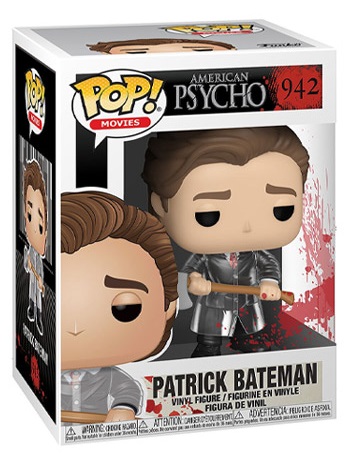
I’ve done something you might consider lame and unhealthy. Namely, I’ve read all three hundred and ninety-nine pages of Bret Easton Ellis’s 1991 novel American Psycho. Though probably best known today for his anti-David Foster Wallace tweets, Ellis was—once upon a time during the Eighties—among the hippest, the hottest, the MTV-est of young American writers. I hadn’t read anything by Ellis since that decade, over three decades ago, when I’d visually ingested his first two novels, Less Than Zero (1985) and The Rules of Attraction (1987), tales of wealthy late-adolescent decadence that I’d thought resembled somewhat desperate, R-rated blends of Miami Vice and Nancy Reagan’s Just-Say-No propaganda, two Eighties artifacts that look pretty quaint today.

By contrast, American Psycho, Ellis’s third novel, examined wealthy twentysomething decadence but in such a violent, sexually-explicit way that Simon & Schuster, the original publisher, had second thoughts and backed out, causing the novel to appear instead as a Vintage Contemporaries paperback. (Another quaint artifact: Vintage Contemporaries published novels aimed at, though not necessarily about, the trendiest of trendies who might want something to read, just to relax after spending a grueling day hunting for the perfect vintage bowling shirt.) Reviewers, too, had problems with “the novel’s moronic and sadistic contents,” as Roger Rosenblatt put it in 1990 in a hyperventilating New York Times review that went on to call American Psycho “the most loathsome offering of the season” and the product of, yes, a “lame and unhealthy imagination.”

The novel’s narrator, Patrick Bateman, a twenty-six-year-old who works at a Wall Street investment house, goes into excruciating detail about fashion, furniture, electronics, male cosmetics, trendy restaurants, trendy clubs, cocaine, and other expensive consumer items of the late Eighties-slash-early Nineties (and I do mean slash, as you’ll soon see). Decades later, Bateman comes across as Aspergerian in his obsessive recounting of yuppie trappings—unfortunately Aspergerian, since he also goes into extremely excruciating detail about his torture, murder, or both, of prostitutes, workplace colleagues, children, the homeless, and—yes!—rats. At one point, rats figure prominently in a torture-murder; you may never look at a Habitrail in the same way again. (People with my autistic condition already put up with unfortunate PR due to the alleged Asperger’s of criminals such as the Sandy Hook mass murderer.) And of course, as a cheap narrative signifier of his vileness, Bateman almost constantly rents porn videotapes, as if his brutality—not to mention his racism, sexism, and anti-Semitism—didn’t already suffice. (Though in retrospect, as a better narrative signifier of vileness, he also idolizes Donald Trump.)

By the novel’s last few dozen pages, however, Bateman, through his narration, indulges in sentimentality (as in visiting his mother in the nursing home); Ellis either wimped out or wisely realized his readers needed a break from the nonstop violence and cynicism.

While I wouldn’t call this a great novel, it does serve as a valuable historical document.

Copyright © 2021 by David V. Matthews

Never, Ever Vote

Running across this page two days ago from the January 14, 2019, National Enquirer while Net-fishing for Pynchon articles in Lake Google (as I occasionally do during my downtime—yes, having downtime makes me an adult), I thought I’d encountered what the Leader of the Free World has termed “fake news.”  First, why hasn’t any other media outlet covered this?  And second, why would the celebrity-besotted Enquirer care about that eighty-one-year-old “acclaimed National Book Award winner”, and why would it think its readers do?  Then I realized such a reclusive author—“photographed just four times in his 50-plus year career!”—would prove a challenge to a voyeuristic tabloid that exposes everyone famous (except for the abovementioned Leader, though that situation may have changed).

The Enquirer managed to snap at least two pics of Pynchon after he’d apparently “emerge[d] to vote” last November 6 in New York City.  He’s definitely aged since his bucktoothed youth and walks with a cane, but he does have a full head of hair.  Perhaps the paper’s readers will develop or have already developed an interest in non-mainstream, National Book Award-winning literature, if such an interest will keep them from going bald.  And perhaps the other media outlets will get over their jealousy and start acknowledging the Enquirer’s existence; in this privacy-free world, winners snoop first and snoop the most, giving vicarious pleasure to the winners’ promoters and followers, though I assume some Enquirer fans worry about their status as corporate, social-network, and government surveillance targets, since paying attention to Brad Pitt and Angelina Jolie does not necessarily preclude one from also paying attention to civil liberties.

Addendum, 2/22/2019: Some Enquirer readers do worry about privacy, or at least the paper has tried convincing them they should; an article headlined “Facebook Is Selling Your Life Secrets!” appeared in the same issue as the Pynchon pics.  Perhaps Mark Zuckerberg’s partial support for Democrats has rankled Trump’s (former?) pal, the Enquirer publisher David Pecker.  (Zillionaires such as Z-Man tend to contribute to both major parties, to cover all bases, to the displeasure of right-wingers such as Pecker who probably hate baseball metaphors.)

Copyright © 2019 by David V. Matthews