Capital-Q Quirky

Another excerpt from “Our Putative Couple,” a work in progress. For the first excerpt, please click here.

At a dark wooden table in downtown Garnetville’s trendiest bar, Bouquets, whose drinks all had floral names and steep prices:

“I broke up with Brody yesterday,” Cassie says.

“You did?” Olivia says.

“Uh-huh. We got along well enough, but sometimes—sometimes, if you don’t watch out, you can fall down the well and drown.”

Cassie sips her rhododendron (2 ounces [60 milliliters] dry vermouth, 1 ounce [30 milliliters] red herbal liqueur, 3 dashes absinthe, garnish with an orange twist—US $28.00 total but pretty dang great).

“Also,” she continues, “I think he kept trying to push me down that well.” She adopts a slightly gravelly voice: “ ‘Yes, look a li’l bit deeper, Cass, you’ll see our future together, where you prostrate yourself before me twenty-five hours a day, eight days a week, just for the heck of it—ah, yes, the heck-related reason, the best reason for prostrating.’ ”

Olivia laughs while reaching for her delphinium (1½ ounces [45 milliliters] white wine, ½ ounce [15 milliliters] lime juice, ½ ounce [15 milliliters] orange liqueur, ¼ ounce [7½ milliliters] blueberry syrup, garnish with skewered blueberries—also US $28.00 total, also dang great, the dangest, in fact).

During Brody and Cassie’s first date, in which they stroll around the Garnetville University campus, Cassie tells him (as she does with every guy during the first date, to make a capital-Q Quirky first impression and thus maintain her brand) about her “bio-dad,” Dr. Reed Flanagan, white, cisgender, unmarried, a media and cultural studies professor at that school, who, in 1985 at age forty-six, not long after Cassie’s birth, had a brief romance with one of his graduate assistants, Sydney Bartholomew, a white, cisgender, unmarried woman half his age, the first time he’d ever “boinked a student during his sixteen years there.” A few weeks after the relationship “had cratered,” she paid a surprise visit to his campus office, where she told him “he might as well hear” from her and “not from the ol’ grapevine” that, first, “he’d knocked her up”; and second, “she planned to have an abortion, a legal abortion, back when every state still permitted women to have reproductive rights, excuse the editorializing.” As it turned out, he supported her decision. He supported it so much, he insisted on paying for the procedure. No, he “vehemently insisted.” He actually used that adverb. How could she refuse? “Perhaps she would have used the V-word if he hadn’t offered to pay.” Anyhow, he “forked out three hundred bucks, a bargain back then.” Then he resigned before he could face disciplinary proceedings for his “inappropriate relationship.” He spent the last nineteen years of his educational career teaching media and cultural studies at the only place that would hire him: “a much smaller and more intellectually undemanding school,” Trebain College, in Trebain, Iowa. He still resides in “that minuscule town,” from which he sends Cassie “epic e-mails extolling the Midwest” and suggesting she move there. No thanks—she’d rather continue living near Pittsburgh, “essentially one big Superfund site,” than “suffer through the most stultifying boredom ever conceived of by demonic geniuses who speak with a twang, eeeee-yup.” Anyway, as it turns out, before leaving for Iowa, he “knocked up another woman,” Cassie’s mother’s sister, “during that rarest of occurrences, a one-night stand.” The result: Cassie’s “nephew-slash-half-brother Zane,” who receives the same e-mails from their father, “cat memes included,” as she does.

Pause.

“Do you like oatmeal?” Brody asks.

Pause.

Cooked oatmeal?” Cassie replies.

“Uh-huh.”

“Yes, I like cooked oatmeal, but only with brown sugar.”

“I like oatmeal, too, but in my case, only with fruit cocktail, the type in heavy syrup with artificially-colored cherries. It makes the oatmeal taste like—Santa’s helpers.”

“You into cannibalism?”

Candy cane-iballism. Sorry.”

“Why apologize?”

By her mid-teenage years, Olivia decides to devote her life to literature (the more classic the literature, the better), as a way to rebel against her parents. Her father, Grant Purcell (a white cisgender man who received a master’s of business administration [1978] from the Alden Business School, and who serves as the CEO [chief executive officer] of Shining Beacon, one of Pennsylvania’s largest insurance companies), reads only two types of books: ghostwritten memoirs (in hardback) from white, presumably cisgender, male American tycoons, about the tycoons’ inexorable rise to fame and how anyone can succeed just like them; and action-adventure novels (in paperback) about white, presumably cisgender, male American police officers, private detectives, secret agents, and mercenaries who battle—and always triumph over, usually lethally—Eastern-Bloc Communists, Middle-Eastern terrorists, Central-American narcoterrorists, African-American gang members, treasonous bleeding-heart white liberal American politicians, and other violent, savage, grotesque, human-adjacent foes. By comparison, her mother, Ruth Purcell (a white cisgender woman who received a bachelor of science in entrepreneurship [1983] from Lockridge University, and who runs her own business, New Performance Consulting, Incorporated), never reads any books, at least in her daughter’s presence. That doesn’t necessarily mean Mrs. Purcell never reads any books at all, just that, on a typical evening at the family’s near-mansion, while Grant sits alone in his charcoal recliner in the den (the room he calls his “sanctum sanctorum”), savoring every page of, say, My First Billion Dollars (Give or Take a Nickel), or Ghost Squad: Takedown in Tehran, Ruth sits on the teal couch in the living room (the room she calls “the living room”), watching, almost always with a rudimentary smile, a rented VHS tape of a popular mainstream hit movie of any genre, showtime always starting exactly at eight. Sometimes she watches an entire franchise from the beginning, one entry a night; on July 28, 2003, the eighteen-year-old Olivia joins her mother for the first time in doing just that, watching Extreme Weather (1994); followed the next night by Extreme Weather 2 (1996); then Extreme Weather 3 (1999); then the final one in the series, the straight-to-video Extreme Weather: Tsunami (2001), all on rented DVDs (the Purcells had replaced their VHS player with a DVD player by this point), and all of these movies featuring white, cisgender male protagonists and their much younger, white, cisgender female love interests fleeing from cheesy-looking, computer-generated dangers that include rainstorms, snowstorms, sandstorms, hailstorms, and genetically-modified wolves with foot-long fangs.

Olivia had never seen any Extreme Weather movie, due to her aversion to lowest common denominator entertainment product; however, wanting for some unfathomable reason to experience more than a few milliseconds of quality mother-daughter time before leaving for college in a few weeks, Olivia, for four nights running, slowly walks to the couch (sometimes shuffling her feet as noisily as possible upon the hardwood floor, to warn every inhabitant of the Western Hemisphere of her approach); sits down next to Ruth at 7:59:58; and watches her press the remote control’s PLAY button. The two Purcells stare straight ahead at the screen for the movie’s duration (including the entire closing credits), neither mother nor daughter saying anything. Afterwards, Olivia mutters “G’night,” Ruth says “Good night,” and Olivia walks (or noisily shuffles) off to bed.

But during the fourth night, after the final Extreme Weather had ended and Ruth had pressed the remote’s OPEN/CLOSE button to eject the disc:

“God, Mom, how could you stand watching that sexist garbage?”

“Sexist garbage?”

“Amber [the white, cisgender female love interest] whines like a little kid for the entire movie. She can’t do anything. She needs a man to save her. She never gets stronger or more independent. And when she runs from that humongous wave, of course she has to say”—Olivia adopts a squeaky voice—“ ‘Ohhh noooo, I broke a nail! Sob sob sob!’ ”

“In other words, you prefer feminist propaganda.”

“If you mean movies that don’t dehumanize women, then, yes, I prefer feminist propaganda.”

Ruth pauses.

“Can’t you just enjoy a movie for once?” she asks.

“I dunno. Anything can happen, I guess. Good night, Mom.”

Copyright © 2026 by David V. Matthews

More 2000s Content and—What? You’re STILL Pissed off about the Sopranos Finale?

Two skinny (and dapper) white guys, from Not Very Factual: DVM Meets John Waters.

Americathon: The Worst Fotonovel™ Ever?, February 26-March 2, 2001 (revised June 5-6, 2023)

Enduring Rehash?, September 21-23, 2001 (revised September 27-29, 2001)

Not Very Factual: DVM Meets John Waters, July 9, 2005

Movie Review: Licorice Pizza (2021)

Also, we could have seen full-frontal Nixon in the movie, so I suppose we SHOULD thank PTA for his restraint.

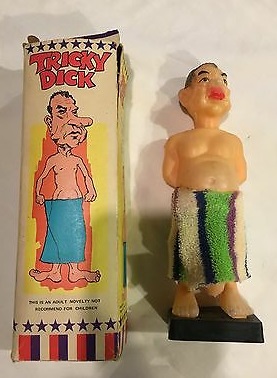
Regarding the romantic relationship between a fifteen-year-old boy and a twenty-five-year-old woman, the routine sexual harassment, and the Caucasian gentleman speaking in a fake Japanese accent to his string of Japanese wives: yes, these scenes don’t jibe with today’s sensibilities, but writer/director/pale male Paul Thomas Anderson, born in 1970, could have offered an accurate—as in a more unjibeful—representation of mores from 1973, the period the movie depicts. Avoiding cinematic even-worseness: a low bar, true, but mainstream flicker shows distributed by international entertainment media corporations tend to eschew anything too realistic (including, of course, content that supports worker rights or questions the capitalist system) to avoid bumming out and/or angering audience members. Born five years before PTA, I remember (probably a little better than he does) that era’s pervasive traditional thinking, shall we say.* Perhaps the white and (from the looks of it) well-off Encino-ites in this movie had learned to hide their Nixon-era beliefs, unlike a large portion of my more honest economic stratum. (Note: as Harvey Weinstein, Rupert Murdoch, Donald Trump, and Tricky Dick himself show, having money and belonging to a particular race do not automatically make one more considerate of other humans.) (The Dickster appears in that movie in news footage.)

*Example: Mike the Barber, the guy who cut my hair, would inveigh against the criminal “[N-words]” who had moved into the neighborhood and caused its condition to deteriorate. His waiting area featured copies of the white-supremacist rag The Spotlight, one of whose articles called The Diary of Anne Frank a fraud written in ballpoint pen by Jewish hoaxsters years after World War Two; that mention of the specific writing implement may have helped me remember that piece. Eventually, my father quit taking me to him, partly because my father had at long last taken offense to the views expounded in that shop, and partly because Mike kept hacking up my head.

© 2022 by David V. Matthews

January 10, 2022 (revised January 11, 2022) (and also January 28, 2022)

Three Unfinished Pieces

December 1, 2012

In 1974, the film critic John Simon wrote that “American movies in general, and recent ones in particular,…do not (cannot? dare not?) cope with serious, contemporary, middle-class, adult problems.” The typical American movie “deal[s] with the western frontier, the historical past, some war or other; with the criminal classes, occasionally spies, possibly even law enforcers; more rarely with the lives of famous people (rarer nowadays, when the common man is more in than ever); and now and then lovable prostitutes, impoverished blacks, or exploited Indians.” Almost “every notable American film is a genre film, a frothy little comedy, or a specialty number” that says nothing noteworthy about “middle-class living[,]” implicitly non-black or non-Indian, apparently.

Today, after decades of accelerated income inequality due to free-market fanaticism (even that alleged far-left radical Obama has drooled over the free market), corporate domination over everything (including the movies), and Republican reverence toward the rich, the American middle-class has virtually vanished, replaced by either one-percenters or the people who earn minimum wage cleaning the one-percenters’ toilets; thus, why should Hollywood bother depicting a life not too many members of the prime movie-going audience (adolescent males and adults of any age with adolescent-male mentalities) have ever experienced? Hobbits are more realistic nowadays than the breadwinner who can earn enough each month to support his or her family and have a little left over to save for retirement. Movie audiences don’t like reminders of their powerlessness, instead preferring (or convinced by media indoctrination that they prefer) blinged-out, kick-ass fantasies with plenty of blood squibs and fiery explosions. Westerns may have gone out of fashion, but period pieces, war, and crime still dominate the cinematic imagination, with occasionally the dysfunctional lives of famous people, usually well-merchandised, classic-whatever-genre singers. The “common man” has turned into a pumped-up, violent action hero cavorting in front of green screens; “lovable prostitutes” now have buff figures and can slaughter as many bad guys as the uncommon man can; “impoverished blacks” have ditched the impoverishment angle in favor of firearms and wisecracks; and “exploited Indians” have vanished, replaced by Muslim terrorists.

Simon’s preference for the “serious adult film” now seems quainter than the Constitution.

August 23, 2013 (last paragraph slightly revised February 17, 2021)

Peter Frank and Michael McKenzie. New, Used & Improved: Art for the 80’s. New York: Abbeville Press, 1987.

Anyone who wants to get rich will try doing so by making specific career or financial choices, especially during an era that venerates wealth, status, and ostentatiousness more than usual—an era such as the Reagan era, the Nineteen-Eighties, also known as the go-go Eighties, as in wake me up before you go-go walking past those homeless guys sleeping on the sidewalk.

Peter Frank and Michael McKenzie’s book New, Used & Improved: Art for the 80’s offers a glossy, well-illustrated chronicle of New York City’s hipper-than-hip art scene during that decade. However, amid all the details about painters, sculptors, photographers, graffitists, musicians, performance artists, nightclub designers, gallery owners, and “thespian andogynes[,]” the authors mostly ignore the socioeconomic influences upon that scene.

Speaking of socioeconomics: in 1987, as a striving painter who fantasized about making it big in Greenwich Village, I wanted to buy this lavishly-illustrated book about New York City’s hipoisie art scene, but as a broke college student, I couldn’t afford to do so. In 2013, as a sort-of-successful artist-slash-writer-slash-promiscuous-hyphenator, I bought this book’s original hardcover edition at Half Price Books for five dollars and ninety-five cents plus tax. If I had read this book as a young man, I might have reconsidered my career ambitions. Or maybe not.

August 9, 2018

I’ve done something you might consider lame and unhealthy. Namely, I’ve read all three hundred and ninety-nine pages of Bret Easton Ellis’s 1991 novel American Psycho. Though probably best known today for his anti-David Foster Wallace tweets, Ellis was—once upon a time during the Eighties—among the hippest, the hottest, the MTV-est of young American writers. I hadn’t read anything by Ellis since that decade, over three decades ago, when I’d visually ingested his first two novels, Less Than Zero (1985) and The Rules of Attraction (1987), tales of wealthy late-adolescent decadence that I’d thought resembled somewhat desperate, R-rated blends of Miami Vice and Nancy Reagan’s Just-Say-No propaganda, two Eighties artifacts that look pretty quaint today.

By contrast, American Psycho, Ellis’s third novel, examined wealthy twentysomething decadence but in such a violent, sexually-explicit way that Simon & Schuster, the original publisher, had second thoughts and backed out, causing the novel to appear instead as a Vintage Contemporaries paperback. (Another quaint artifact: Vintage Contemporaries published novels aimed at, though not necessarily about, the trendiest of trendies who might want something to read, just to relax after spending a grueling day hunting for the perfect vintage bowling shirt.) Reviewers, too, had problems with “the novel’s moronic and sadistic contents,” as Roger Rosenblatt put it in 1990 in a hyperventilating New York Times review that went on to call American Psycho “the most loathsome offering of the season” and the product of, yes, a “lame and unhealthy imagination.”

The novel’s narrator, Patrick Bateman, a twenty-six-year-old who works at a Wall Street investment house, goes into excruciating detail about fashion, furniture, electronics, male cosmetics, trendy restaurants, trendy clubs, cocaine, and other expensive consumer items of the late Eighties-slash-early Nineties (and I do mean slash, as you’ll soon see). Decades later, Bateman comes across as Aspergerian in his obsessive recounting of yuppie trappings—unfortunately Aspergerian, since he also goes into extremely excruciating detail about his torture, murder, or both, of prostitutes, workplace colleagues, children, the homeless, and—yes!—rats. At one point, rats figure prominently in a torture-murder; you may never look at a Habitrail in the same way again. (People with my autistic condition already put up with unfortunate PR due to the alleged Asperger’s of criminals such as the Sandy Hook mass murderer.) And of course, as a cheap narrative signifier of his vileness, Bateman almost constantly rents porn videotapes, as if his brutality—not to mention his racism, sexism, and anti-Semitism—didn’t already suffice. (Though in retrospect, as a better narrative signifier of vileness, he also idolizes Donald Trump.)

By the novel’s last few dozen pages, however, Bateman, through his narration, indulges in sentimentality (as in visiting his mother in the nursing home); Ellis either wimped out or wisely realized his readers needed a break from the nonstop violence and cynicism.

While I wouldn’t call this a great novel, it does serve as a valuable historical document.

Copyright © 2021 by David V. Matthews

Socialism and Digital Puddles

For the past several weeks, a small, full-color, slightly-dark photocopy of the above poster for the 2018 romantic comedy Overboard has hung in the DVD section of the B.F. Jones Memorial Library, Aliquippa.  I haven’t seen this movie or the original, 1987 version starring Goldie Hawn and Kurt Russell, though I have read Susan Faludi’s takedown of the original in her 1991 book Backlash: The Undeclared War against American Women.

Anyway, you might have noticed that Anna Faris shows more skin (and more Photoshopping) than her male costar does; as every intelligent person living under our belovèd capitalist patriarchy knows, unsexy (as in non-media-sexy) women make advertising—particularly for entertainment-style products—repulsive and thus ineffective, weakening the economy.

Speaking of economic matters: in this movie, Faris plays (according to Professor Wikipedia) “a struggling, working-class single mother”.  So maybe you left-wing, Faludi-reading, fair-trade-coffee-enema-receiving losers should quit complaining, because America’s lower economic stratum teems with smokin’-hawt hawties.  (All right, I should give this Trump-era movie credit for keeping Faris’s character’s love interest, as seen on the poster, Mexican, instead of, say, Caucasianizing him via CGI, or hiring Christopher Plummer for last-minute reshoots.)  (Yes, almost everyone will understand the Plummer reference decades from now, assuming the Earth—I mean the Internet—still exists.)

Copyright © 2018 by David V. Matthews

The Default Setting for Life

I saw 2001: A Space Odyssey on Sunday in Pittsburgh, at the Carnegie Science Center’s Rangos Giant Cinema, the first time I’d ever visited that theater.  2001 didn’t quite fit the concave screen, causing a dark shadow at the bottom, making the projected image looked as if it had shrunk in the wash.  However, the outstanding digital quality caused me to notice details I hadn’t previously noticed or remembered—e.g., the selections list (apple juice, wine, and so on) for the beverage dispenser aboard the spaceship.

Something I wondered afterwards, as I walked toward the Science Center exit (spoiler alert for a fifty-year-old film): at the end, why didn’t the aliens from the vastly-advanced civilization turn Dave Bowman into a female fetus instead of a male fetus (assuming they’d had some part in his transformation)?  My girlfriend, who had accompanied me to the screening, wondered this too, calling female “the default setting for life”; even aliens advanced enough to design a Louis XIV-style hotel room with a proto-disco-style illuminated floor need females to produce presumably new and improved futuristic humans, though possibly the aliens had some awareness of our planet’s rampant patriarchal mindset and thought us Earthlings would find a male fetus more acceptable in launching our next stage of evolution.

Or maybe the aliens themselves had a patriarchal mindset.

Even creators as intelligent and innovative as Stanley Kubrick and Arthur C. Clarke apparently couldn’t or wouldn’t imagine an escape from mandatory maleness, or how an omniscient, floating female fetus could affect civilization (meaning most artists—actually, most people—cannot escape their eras; the mid-1960s, which had brought us 2001, didn’t have a very prominent feminist movement, plus probably a majority of audience members back then would have found an intersex or transgender plot twist perverse if not disgusting; and as a pre-Stonewall gay man, Clarke would have no doubt known about Western society’s conceptions of “normal” gender-related appearance and behavior).

But would a female fetus make a difference in human development?  The aliens, via the black monolith, had already taught our ancestors how to kill; and according to Kubrick and Clarke, cultures (including extraterrestrial ones) conceal their brutal, violent, hardwired urges beneath a veneer of sophistication, of scientific advancement, and of Howard Johnson’s Earthlight Rooms.  The Twenty-first Century, in case you haven’t noticed, has rooms that epitomize supercharged human development.

Copyright © 2018 by David V. Matthews

Updated September 16. 2018