Your unremitting hatred made me the acclaimed industrial musicmaker I am today. (Well, acclaimed so far only on Screeeee!, this “noise, etc.” website run by an Indiana concert promoter I once blew.) When I was about fifteen or sixteen, I realized (after years of enduring your abuse) that I could become whatever I wanted because you’d never love me no matter what I said or did, whether I won the Nobel Prize for discovering a cure for cancer or sold cartons of your cigarettes to scuzzy junior high-school students so I could afford a bag of pot or the new Judas Priest album.
But what did I want to become? With my grades, I had no hope of attending Harvard, much less clown college. I had no interest in the Republican brainwashing crap the high school taught, anyway. I thought about blowing my way up the corporate ladder, but I remembered I hated yuppie scum back then. On the other hand, I didn’t want to slave at the sardine plant the way you did, loser.
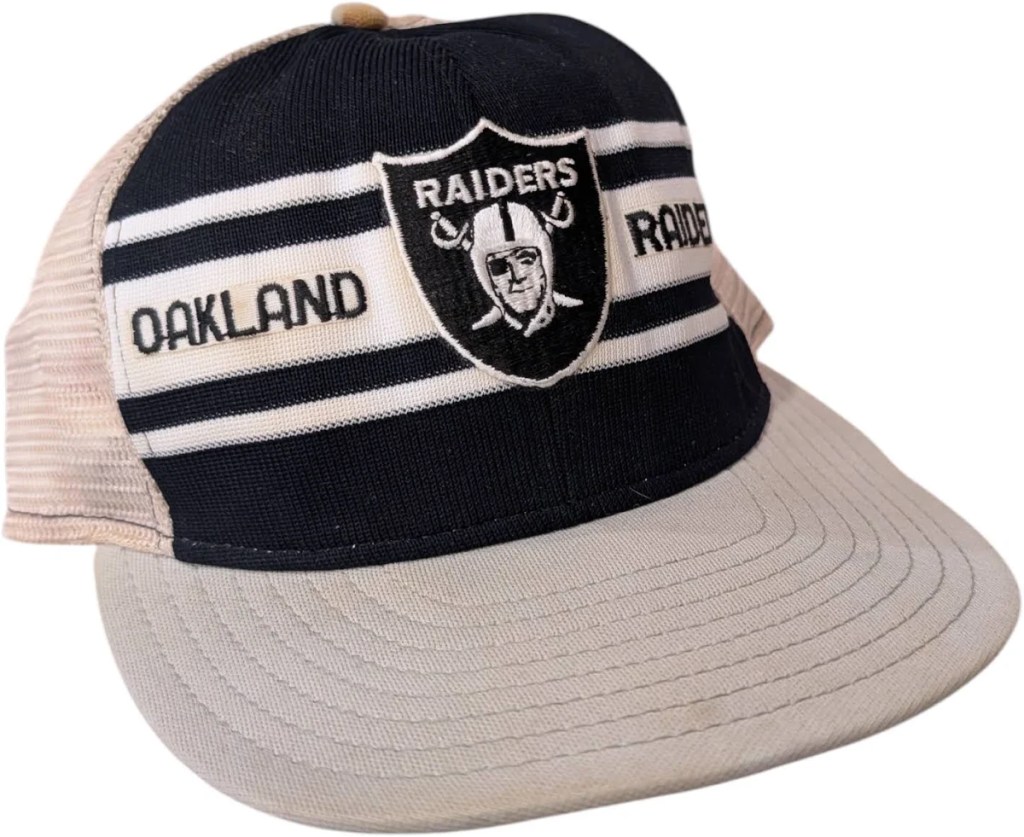
Then came the ballcap incident. Remember that? I was sixteen, and we were living in that mobile home with the wood grain Con-Tact paper and the cat-piss smell (strange, considering we didn’t own a cat). It was night, and I was on the couch watching a Fall Guy rerun. You were in the kitchen, microwaving something that smelled garlicky. Suddenly—who knows why—you barged toward me and screamed “Where’d you put my goddamn Raiders cap?” “Nowhere,” I muttered; I didn’t even know you had a Raiders cap. “Liar! Goddamn thief!” you screamed louder. Ordinarily I would’ve screamed something back at you then left to smoke pot in the woods, but I decided to sit on the couch and keep quiet, to see how long you’d continue screaming at me. Thirty minutes later you were still at it, not hoarse at all, screaming “goddamn” this and “stupid, ungrateful slut” that, probably a record for you. I wanted to punch you in the mouth so I could shut you up, but I didn’t feel like wasting the effort on you. So I said “Don’t you have something in the microwave?” Amazingly, that shut you up; I thought you’d throw in a final “idiot” or two as a closing thought. You went back into the kitchen, and I ran outside.
That chilly night while toking up in the woods, I thought about your screeching voice, your broken-record insults packed with rage, and decided to become a…slut for real, just so I wouldn’t disappoint you in at least one area.
Five years and a million screw-partners later, I had just finished screwing this pustular air-guitarist named Austin in a welfare hotel. His face looked completely made of Braille and creeped me out; I had to punish him for offending my eyeballs (and for lasting only a minute in bed), so while he was in the bathroom pooping, I got dressed, took several records he had lying about, and left, thinking I could sell them at Spin Me Round Vintage Vinyl. Back at my apartment, I looked at them: typical metal sludge, plus one called Tension Headache from a local group I hadn’t heard before, Dry Orifice. I put on the album: no lyrics, no melody, just 30 minutes of clanging bells, chugging engines, and an unbelievable high-pitched scrape. I hated every second of this record, then realized that if anyone could make money doing this, I could; I’d endured your screaming for years, so I knew what noise was.
So I attended the next Dry Orifice concert, held in some pesthole with dripping cinderblock walls. After the show I met the group’s frontman, a skinny gray 38-year-old named XQ. I screwed him several times, got into the band as a clanger (me, with no musical training, as if I needed any) and began the musical ascent that continues today when I’m not working at the sardine plant—in clerical, okay? So thanks for introducing me to noise, for inadvertently causing my success. Happy Mother’s Day, loser. Oh, and did you ever find your goddamn Raiders cap?
Originally posted on my long-defunct website, Pixel Stupor, April 22, 2002 (story revised May 2-3, 2002)
The third excerpt from “Our Putative Couple,” a work in progress. For the first two excerpts, please click here and here.
■
October 10, 2025:
“We’ve received some concerning reports about you.”
“Concerning reports? Wow, no one has ever written any concerning reports about me before. How many of these concerning reports have you received?”
“More than one.”
“One and a half?”
“Ha ha, sure, okay, one and half. One and three-quarters if it makes you happy.”
Exactly a month earlier, via a series of posts on X (the social media platform that Livin’ la Vida Locher will call the Spot), the United States Department of Education announced it had frozen US $380 million in federal research grants for Garnetville University, due to, first, the school’s “failure to protect students on campus from anti-Semitic discrimination— all while promoting divisive ideologies over free inquiry”; and second, the school’s “Diversity, Equity, and Inclusion (DEI) programs” that have fomented “division and hatred based on race, color, national origin, and other protected identity characteristics” and thus worsened “intellectual and civil rights conditions.” To have its funding restored, the school needed to “enter into discussions” with the government “regarding institutional reforms” the school “should implement as soon as possible to ensure a safe learning environment for all students while safeguarding viewpoint diversity.”
Olivia thought Garnetville University, her employer, should sue the Trump administration on First Amendment grounds. Instead, the school capitulated, which didn’t surprise her, considering its reliance on sweet, sweet military contracts. So bye-bye DEI. And helloooo to the school’s latest employee, on the job for a little over a week: Zoey Jennings, white, cisgender, twenty-eight, bias monitor (a new position), sitting behind a desk, with Olivia sitting across from her, in a cavernous office in the Administrative Annex, a gray two-story slab with a pebbly façade.
“You know what everyone on campus calls this building?” Olivia asks.
No response.
“The cheese grater. It looks like one?”
“Ha ha, yeah, it does,” Zoey says. “According to—”
“I created that nickname.”
“Congratulations. According to the reports I’ve received, you showed a certain film in class a couple days ago.” Zoey, reading aloud from the laptop on her desk: “Doctor Farnsworth [a 1987 British and American coproduction]?”
“Yes, I did show that,” Olivia responds.
“And you discussed the radical gender ideology it promotes?”
“Ah, yes, radical gender ideology. A fair and balanced term.”
“Did you discuss the ideology?”
“If your concerning reports say I did, then yes, I did.”
“You discussed it favorably.”
“Again, if your concerning reports say I did—I trust their veracity.”
The film opens in 1867, when a white, presumably cisgender, eighteen-year-old, orphaned, homeless London resident named Henrietta Farnsworth, who’s always had an interest in what she calls “doctorin’—sorry, doctoring,” wants to improve her socioeconomic status by earning a degree from “the most pres-tee-gee-ous educational institution in good old London town,” the Dillingham University School of Medicine, where “the cram de la crop” gets admitted “grattees—uh, gratis, yes, you drink grat teas at tea time, from the grat bush in Southern Grattonia.” However, the school does not admit women. But she applies anyway, in person, disguised as a man named Henry Farnsworth (short hair, long trousers, waistcoat, bowler hat, a smudge of dirt smeared onto her face), and she gets into the school. Over the next two decades, Henry Farnsworth graduates with honors from that school; rises to lofty heights in the medical profession, successfully performing complicated operations that adhere to the film’s PG rating by featuring not much blood and no visible viscera; adopts proper English (“The Queen could take elocution lessons from me, gratis, of course”); moves into a country manor (with loyal country servants who now provide the film’s mispronunciation-and-malaprop-related comic relief); falls in love for the first time, with the white, cisgender, much younger, much wealthier Lady Florence “Flossie” Hargreaves and vice-versa; and tells her (as forboding, somewhat loud, piano-and-synth instrumental music plays on the soundtrack) about a secret he’s never told anyone before, namely—
“Do you think taxpayer dollars should pay for spreading transgenderism at school?” Zoey asks.
Olivia chuckles.
“Do you?”
“Sure, sure, whatever.”
“You’ve certainly praised in class what you call ‘gender-affirming care for young people.’ ”
“That I have.”
“So you don’t mind child genital mutilation?”
“You mean gender-affirming surgery? Trans kids rarely have that type of surgery.”
Zoey chuckles. “Sure, whatever.”
“Do you think they should have cosmetic surgery instead? Lots and lots and lots of cosmetic surgery?”
“Onto a different topic.”
“You don’t mind if twelve-year-old girls—”
“What do you think about Israel?”
“What do I think about Israel.” Olivia, scratching her right temple with her right forefinger: “Hmm.” She stops scratching. “Well, speaking as a Jew—and you do know about my Jewishness, right? Of course you do. The government knows everything. Well, Republican governments do. Anyway, speaking as a Jew, I have to say”—pause—“ohhhh, Israel, I love ya, but”—shorter pause—“I think we need some time apart.”
“Ha ha ha, yeah, you love Israel, sure.”
“But I do.” Olivia, languidly pumping her fist: “Go, go, Israel. Go, go, Israel. Yaaaay, Israel.”
Another excerpt from “Our Putative Couple,” a work in progress. For the first excerpt, please click here.
■
At a dark wooden table in downtown Garnetville’s trendiest bar, Bouquets, whose drinks all had floral names and steep prices:
“I broke up with Brody yesterday,” Cassie says.
“You did?” Olivia says.
“Uh-huh. We got along well enough, but sometimes—sometimes, if you don’t watch out, you can fall down the well and drown.”
Cassie sips her rhododendron (2 ounces [60 milliliters] dry vermouth, 1 ounce [30 milliliters] red herbal liqueur, 3 dashes absinthe, garnish with an orange twist—US $28.00 total but pretty dang great).
“Also,” she continues, “I think he kept trying to push me down that well.” She adopts a slightly gravelly voice: “ ‘Yes, look a li’l bit deeper, Cass, you’ll see our future together, where you prostrate yourself before me twenty-five hours a day, eight days a week, just for the heck of it—ah, yes, the heck-related reason, the best reason for prostrating.’ ”
Olivia laughs while reaching for her delphinium (1½ ounces [45 milliliters] white wine, ½ ounce [15 milliliters] lime juice, ½ ounce [15 milliliters] orange liqueur, ¼ ounce [7½ milliliters] blueberry syrup, garnish with skewered blueberries—also US $28.00 total, also dang great, the dangest, in fact).
■
During Brody and Cassie’s first date, in which they stroll around the Garnetville University campus, Cassie tells him (as she does with every guy during the first date, to make a capital-Q Quirky first impression and thus maintain her brand) about her “bio-dad,” Dr. Reed Flanagan, white, cisgender, unmarried, a media and cultural studies professor at that school, who, in 1985 at age forty-six, not long after Cassie’s birth, had a brief romance with one of his graduate assistants, Sydney Bartholomew, a white, cisgender, unmarried woman half his age, the first time he’d ever “boinked a student during his sixteen years there.” A few weeks after the relationship “had cratered,” she paid a surprise visit to his campus office, where she told him “he might as well hear” from her and “not from the ol’ grapevine” that, first, “he’d knocked her up”; and second, “she planned to have an abortion, a legal abortion, back when every state still permitted women to have reproductive rights, excuse the editorializing.” As it turned out, he supported her decision. He supported it so much, he insisted on paying for the procedure. No, he “vehemently insisted.” He actually used that adverb. How could she refuse? “Perhaps she would have used the V-word if he hadn’t offered to pay.” Anyhow, he “forked out three hundred bucks, a bargain back then.” Then he resigned before he could face disciplinary proceedings for his “inappropriate relationship.” He spent the last nineteen years of his educational career teaching media and cultural studies at the only place that would hire him: “a much smaller and more intellectually undemanding school,” Trebain College, in Trebain, Iowa. He still resides in “that minuscule town,” from which he sends Cassie “epic e-mails extolling the Midwest” and suggesting she move there. No thanks—she’d rather continue living near Pittsburgh, “essentially one big Superfund site,” than “suffer through the most stultifying boredom ever conceived of by demonic geniuses who speak with a twang, eeeee-yup.” Anyway, as it turns out, before leaving for Iowa, he “knocked up another woman,” Cassie’s mother’s sister, “during that rarest of occurrences, a one-night stand.” The result: Cassie’s “nephew-slash-half-brother Zane,” who receives the same e-mails from their father, “cat memes included,” as she does.
Pause.
“Do you like oatmeal?” Brody asks.
Pause.
“Cooked oatmeal?” Cassie replies.
“Uh-huh.”
“Yes, I like cooked oatmeal, but only with brown sugar.”
“I like oatmeal, too, but in my case, only with fruit cocktail, the type in heavy syrup with artificially-colored cherries. It makes the oatmeal taste like—Santa’s helpers.”
“You into cannibalism?”
“Candy cane-iballism. Sorry.”
“Why apologize?”
■
By her mid-teenage years, Olivia decides to devote her life to literature (the more classic the literature, the better), as a way to rebel against her parents. Her father, Grant Purcell (a white cisgender man who received a master’s of business administration [1978] from the Alden Business School, and who serves as the CEO [chief executive officer] of Shining Beacon, one of Pennsylvania’s largest insurance companies), reads only two types of books: ghostwritten memoirs (in hardback) from white, presumably cisgender, male American tycoons, about the tycoons’ inexorable rise to fame and how anyone can succeed just like them; and action-adventure novels (in paperback) about white, presumably cisgender, male American police officers, private detectives, secret agents, and mercenaries who battle—and always triumph over, usually lethally—Eastern-Bloc Communists, Middle-Eastern terrorists, Central-American narcoterrorists, African-American gang members, treasonous bleeding-heart white liberal American politicians, and other violent, savage, grotesque, human-adjacent foes. By comparison, her mother, Ruth Purcell (a white cisgender woman who received a bachelor of science in entrepreneurship [1983] from Lockridge University, and who runs her own business, New Performance Consulting, Incorporated), never reads any books, at least in her daughter’s presence. That doesn’t necessarily mean Mrs. Purcell never reads any books at all, just that, on a typical evening at the family’s near-mansion, while Grant sits alone in his charcoal recliner in the den (the room he calls his “sanctum sanctorum”), savoring every page of, say, My First Billion Dollars (Give or Take a Nickel), or Ghost Squad: Takedown in Tehran, Ruth sits on the teal couch in the living room (the room she calls “the living room”), watching, almost always with a rudimentary smile, a rented VHS tape of a popular mainstream hit movie of any genre, showtime always starting exactly at eight. Sometimes she watches an entire franchise from the beginning, one entry a night; on July 28, 2003, the eighteen-year-old Olivia joins her mother for the first time in doing just that, watching Extreme Weather (1994); followed the next night by Extreme Weather 2 (1996); then Extreme Weather 3 (1999); then the final one in the series, the straight-to-video Extreme Weather: Tsunami (2001), all on rented DVDs (the Purcells had replaced their VHS player with a DVD player by this point), and all of these movies featuring white, cisgender male protagonists and their much younger, white, cisgender female love interests fleeing from cheesy-looking, computer-generated dangers that include rainstorms, snowstorms, sandstorms, hailstorms, and genetically-modified wolves with foot-long fangs.
Olivia had never seen any Extreme Weather movie, due to her aversion to lowest common denominator entertainment product; however, wanting for some unfathomable reason to experience more than a few milliseconds of quality mother-daughter time before leaving for college in a few weeks, Olivia, for four nights running, slowly walks to the couch (sometimes shuffling her feet as noisily as possible upon the hardwood floor, to warn every inhabitant of the Western Hemisphere of her approach); sits down next to Ruth at 7:59:58; and watches her press the remote control’s PLAY button. The two Purcells stare straight ahead at the screen for the movie’s duration (including the entire closing credits), neither mother nor daughter saying anything. Afterwards, Olivia mutters “G’night,” Ruth says “Good night,” and Olivia walks (or noisily shuffles) off to bed.
But during the fourth night, after the final Extreme Weather had ended and Ruth had pressed the remote’s OPEN/CLOSE button to eject the disc:
“God, Mom, how could you stand watching that sexist garbage?”
“Sexist garbage?”
“Amber [the white, cisgender female love interest] whines like a little kid for the entire movie. She can’t do anything. She needs a man to save her. She never gets stronger or more independent. And when she runs from that humongous wave, of course she has to say”—Olivia adopts a squeaky voice—“ ‘Ohhh noooo, I broke a nail! Sob sob sob!’ ”
“In other words, you prefer feminist propaganda.”
“If you mean movies that don’t dehumanize women, then, yes, I prefer feminist propaganda.”
Ruth pauses.
“Can’t you just enjoy a movie for once?” she asks.
“I dunno. Anything can happen, I guess. Good night, Mom.”
A toned-down excerpt from “Our Putative Couple,” a work in progress.
■
One drizzly Friday afternoon several weeks before the 2024 United States presidential election, twenty minutes and seventeen seconds into our putative couple’s first visit, either together or separately, to the airport development district’s newest cultural venue, the Kinnick Museum of American Folk Art, the abovementioned couple starts staring at an anonymous painting, Peaceable Kingdom (circa 1860s, oil on canvas, 36.5 inches by 48 inches [92.7 centimeters by 121.9 centimeters], collection of BXR Funds International), that shows a dog, a cat, a hen, a rooster, an eagle, a bluebird, a turkey, a lion, a lamb, a cow, a bull, a bear, and a giraffe all standing in a field and grinning queasily at the viewer. “I don’t know about you, but I love the color scheme,” Brody Waters, our putative couple’s cisgender white male component, age forty-two, a poet/creative writing instructor at Swensen College, says about the work’s dingy, gritty pastels. “It reminds me of depressed cotton candy. No, actually, it reminds me of depressed cotton-polyester blend candy. Artists back in the olden days loved tints and hues and whatever that didn’t require ironing.”
“I like the colors too,” says Cassie Flanagan, our putative couple’s cisgender white female component, age thirty-nine, a trend forecasting analyst at Mattercomp, “but do you know what I like a little more? How the creatures all have dilated eyes. A super new dispensary must have opened in the neighborhood.”
“Yeah. Bambi needs some wacky tobacky, stat. Who wouldn’t, if you lived in a Disney cartoon?”
She chuckles.
Our putative couple continues staring at the painting.
■
An hour, twenty-seven minutes, and forty-three seconds later, they stand outside the museum.
“What a rewarding cultural experience,” Cassie says.
“Yes indeed. I never thought scrimshaw could cause such a frisson of excitement in me,” Brody says, loudly pronouncing that French word as “freeee-sooohn.”
“Ooh la la.”
Pause.
“So you want to attend that concert tomorrow?” he asks.
“No thanks,” she answers.
“How about a movie?”
“Nope.”
“What would you like to do?”
“Uhhh—actually, I’d like to spend the day by myself tomorrow. To recalibrate?”
“To recalibrate?”
“Yup.”
“Recalibrate from what?”
“From everything.”
“All right.” He pauses. “How about Sunday?”
No response.
“Monday? Tuesday? Any day?”
No response.
“Exactly how much time do you need to recalibrate?”
“I don’t know. I’ll call you, okay?”
Longer pause.
“If you recalibrate too much, you’ll go blind,” he says.
She chuckles.
Brief pause.
“So, uh, I guess I should go now,” she says.
“You want a ride?” he asks.
“Thanks, but I’ll walk. I need a good walk.”
“So do I. Maybe I’ll have one someday.”
She chuckles.
Another brief pause.
“Well, uh, bye,” she says.
“Bye,” he says.
They walk off in opposite directions.
■
Two years later, Brody has his first novel published, Livin’ la Vida Locher (304 pages, paperback, Quarto House Press, US $21.99 [Canada $30.00]), whose title paraphrases “Livin’ la Vida Loca,” the 1999 hit by Puerto Rican singer Ricky Martin. The novel deals with a white, cisgender, forty-six-year-old man named Larry Locher, a cultural studies instructor at Gunderson University, who has a brief affair with one of his graduate assistants, Jazmín Torres, a transgender legal immigrant half his age from somewhere unspecified in Central America. As a result of what the novel’s free indirect narrator calls the “hashtaggers (more like trash-haggers—those pests don’t deserve a wittier label)” and the “cancel crowd who’ve cancelled growing the hell up,” Locher loses his job; and his white, cisgender, thirty-nine-year-old wife, Connie Dean-Locher, a trend forecasting analyst at Mastercorp Technology “who pretty much PMSes twenty-five hours a day, eight days a week,” divorces him, taking fifty percent of everything; and Jazmín, who more than once told him “Steeck jour beeg white deeck eenside me, pronto!”, writes Honor Roll, a best-selling, thinly-fictionalized novel about the affair, whereas he cannot get started on his thinly-fictionalized, affair-related novel, What REALLY Happened, because “his ex-wife and his ex-mistress must have sucked the life out of him but not through that certain beeg appendage of his, unfortunately”; and “one of the world’s most popular streaming services, Mango Deluxe,” adapts Jazmín’s novel into a limited series, that service’s most popular offering ever, inspiring “a million memes on the young people’s favorite social media platform, DingDing (and judging from those memes, the young people’s brains must have shrunk in the wash, as that renowned social critic, Gage Cutter [from Cutter’s Law, a 1994 American action movie], would put it)”; and Jazmín and Connie start a romantic relationship, announcing their status via the latter’s account on “that platform for formerly young people, Sunnyday,” via a close-up, sepia-filtered photo of them kissing, with the caption RELATIONSHIP STATUS: TAKEN ✓; and worst of all in Locher’s opinion (or maybe best of all, considering the readers’ proclivities), he can get aroused only when “self-abusing” to fantasies of those two women “humping up a storm.”
Livin’ la Vida Locher receives laudatory reviews both online and in that retro medium, print.
“Waters proves adept at sculpting prose.”—Thomas Woo, pitchingwoo.com
“At last, a one-stop source for political incorrectness.”—dripnose2008, litfreek.com
“This ripped-from-the-headlines novel not only rips up the headlines, it might also rip you a new one.”—Addison Andrews, The Neater Reader
However, Olivia Purcell, in her weekly wordgasm.com column, Purcellular, calls Livin’ la Vida Locher “the worst release yet from that legend in his own mind, the poetaster Brody Waters[,]” who “has really, truly outdone himself this time in the cringe department while adding heaping helpings of MAGA-capped bigotry”; he “obnoxiously” wants readers to sympathize with the white male protagonist, “an aging Gen-Xer who quotes pop culture from the 1990s while going up against deranged, all-powerful enemies: feminists, brown people, immigrants, gays, lesbians, the transgender, Democrats, and—most heinous of all—anyone who quotes pop culture from past the year 2000.” She concedes this novel “has one redeeming quality: the almost-clever names Waters gives his off-brand equivalents of Apple Plus, TikTok, Bluesky, Pornhub, Grindr, et cetera.” But “that still can’t salvage a book even Chad Chaddington would find malodorous. (Though Waters refers to ninety trillion ’90s TV characters, he doesn’t mention his probable role model, Chad, once. To quote a popular hit song from that decade, how bizarre [a reference to “How Bizarre,” a 1995 single from the New Zealand group OMC].)”
Brody can usually shrug off negative reviews. At least they provide a change from the nonstop adoration he receives, not that he hates nonstop adoration, heh heh heh heh heh. But this hatchet job—
He knows Olivia Purcell, white, cisgender, thirty-eight, a presence in airport development district literary circles. He’s run into her over the years at readings, art openings, chamber-music concerts, and other cultural events. “Hey,” she says with a vacuous smile. “Hey,” he replies similarly. They exchange small talk for no more than half a minute, say “Bye” (sometimes he says “Ta-ta”), and part company; otherwise, they have zero contact, though he does hate-read her column every week, to find out what she’s praised or (far more often) what she’s premenstrually eviscerated. She has horrible taste, preferring virtue-signaling pabulum over more intelligent, more challenging fare. Typical book critic—she wouldn’t recognize good writing even if it did the Achy Breaky dance on her face. (He’ll have to remember that line for a future project.)
But perhaps that airhead he’d dated for maybe five seconds a few years ago, Cassie, uh, Cassie Flanagan, had something to do with that review. Both women had attended the same vaguely prestigious school, Garnetville University, together two decades earlier and (at least when he knew Cassie) still kept in touch, having friended each other on Facebook and even occasionally hanging out in person. Cassie might have told her that an insensitive, un-woke poet she’d dated for maybe five milliseconds a few millennia ago had released his first novel; perhaps Cassie had given her a copy. Thanks, Cass.
For previous installments of the ALWAYS WITH LOVE saga, please click (in this order) here, here,here, here, here, here, and here. These two sentences don’t count toward the 130-word limit.
■
In 2025, I was Senior Advisor on Gender Policy for the Trump administration. I worked in a fancy-schmancy office in DC, writing papers on how our country could promote the biological reality of two and only two sexes. I’ve always opposed gender extremism, before “gender extremism” was even a thing.
Anywho, Stewart Pringle, the White House Social-Media Director, he visited me at work one day. He told me the President had lots to do, what with fighting the migrant invasion and wokeness and DEI, so—would I like to help out by writing the President’s posts on Truth Social? “It’s like you two share a brain,” Stewart said. “I can’t imagine anyone else who’d make a better ghostposter, so to speak. Plus you’d have personal access to him.”
Another excerpt from my eternally-upcoming novel, Normal Tastes. (For previous excerpts, please click here, here, and here.)
●
The fountain outside Kornwald’s Department Store spumes upward to about twelve feet. Jill drops a penny into the fountain’s circular reservoir and watches that coin sink to the bottom.
“What do you think the mall does with all the money that people put in there?” she asks.
“Keep it for themselves,” Alan says.
A few dozen pennies cover the bottom, along with some nickels, some dimes, a few quarters, and several arcade tokens.
“Well, I think they donate it to charity,” Jill says.
“Do you think Bigfoot exists too?”
“Some people are nice, Alan.”
“Yeah, yeah.”
The fountain spumes downward.
Alan can stand the Garnetville Mall a little better, now that he has a girlfriend. Holding hands, they walk away from the fountain and through the corridor, sticking to the right, passing Five Star Video, and Everfun Toys, and the Haunted Halloween Store. Soon they approach Wynkoop Organs. Standing near the entrance, they watch the obviously middle-aged white guy who works there—combover, bifocals, maroon suit.
“What a stud,” Alan whispers.
Jill laughs.
The Stud sits down at a deluxe organ, dark gleaming walnut that looks genuine and features a two-tiered keyboard with almost enough knobs and buttons and faders to fill a professional recording studio, the type of studio that rock stars use when not playing in concert or making videos or snorting cocaine off stripper tits. He exhales, stretches his shoulders, cracks his knuckles, places some sheet music in front of him, opens it, adjusts a few knobs, and commences playing something jaunty.
“Hey, that’s ‘Tell Her about It,’ ” Jill says, referring to the recent hit by the American singer Billy Joel.
“Yup,” Alan says.
A few onlookers gather around them.
“You know, I’ve suddenly realized something,” Jill says. “If I were Billy Joel’s daughter, my name would be Jill Joel.”
Alan despises this song, a fucking Fifties tribute about how you need to kiss your girl’s ass so she doesn’t leave you.
And yet, as the Stud continues playing—
“I like this version,” Jill says.
“Me too,” Alan says. “I like it better than the original.”
“Why?”
“I dunno. It sounds more…heartfelt?”
“Yeah, it does.”
“Plus this guy’s a snazzier dresser.”
The performance ends. Everyone except Alan applauds.
“Please don’t clap,” he tells her. “We’re not at a concert.”
“That’s what you think,” she says, still applauding. The Stud smiles at his audience and salutes it.
●
“What do you wanna do tomorrow?” Alan asks her. They’re sitting across from each other at a blazing-orange plastic table near Aunt Rita’s Pretzels.
“Could we visit the Carnegie Museum?” Jill says, pronouncing the founder’s surname the way most Pittsburghers do, as Car-nay-gie.
“Why?”
“I feel like looking at the paintings and sculptures and all that stuff.”
Alan bites into his pretzel, chews, and swallows. “Right.”
“And you don’t?”
“Not really.”
“Why not?”
“ ’Cause looking at art makes me wanna—”
Alan closes his eyes, lowers his head, and pretends to snore.
“Very funny,” Jill says. “So what would you rather do?”
“I dunno. Hang out at your place?”
“Again?”
“What’s wrong with that?”
“It’s…well…it’s like you never want to go out with me.”
“I go out with you.”
“Yes, but you never seem that excited about it.”
“Do you want me to dance a jig or something?”
“No, but—”
“But what?”
“I don’t know.” Jill nibbles at her pretzel. “You could have clapped after that man played the organ.”
“I didn’t feel like clapping.”
“You liked his performance.”
“Yeah, but I didn’t feel like clapping.”
“Okay, you didn’t feel like it. But I did. And you tried to stop me.”
“No I didn’t.”
“Yes you did. You said ‘Please don’t clap.’ ”
“That was a request.”
“It sounded like an order.”
“What difference does it make? You clapped anyway.”
Alan finishes eating his pretzel. Maybe he—
“Do I embarrass you?” Jill asks, sounding angry for the first time around him.
“Excuse me?”
“Do I embarrass you?”
“What the hell kind of question is that?”
“An important one. Do I embarrass you, except when you want to have sex with me?”
“Jill—”
“Is that why you’ve never introduced me to your friends?”
“No, it’s ’cause I don’t think you have much in common with them.”
“I’ve introduced you to my friends.”
Yeah, friends straight from the barnyard—dogs, pigs, and cows. “Okay, the next time I hold a tea party for the guys, I’ll invite you. Ha ha.”
Maybe he shouldn’t have laughed.
“Do you even like me?” Jill asks.
“What?”
“Do you even like me? Have you ever liked me?”
“Cut it out, Jill.”
She looks as if she’d just seen Middle-Eastern terrorists, or Central-American terrorists, or actually any kind of terrorists, blow her family to bits.
“Oh, all right.” He starts clapping rapidly. “Hooray. Hooray for the organ player. Hooray for Billy Joel. Hooray for your friends. Hooray for you. Hooooray.” He stops clapping. “Happy now, goddammit?”
“Yes, happier than I’ve ever been in my entire life,” Jill says in a tremulous voice. “I don’t think we should see each other anymore.”
“Ha ha.”
“I’m serious, Alan. I’ve felt this way for some time.” And here come the tears. “You don’t like me or respect me.”
He considers his options. Should he take that song’s advice and kiss her ass, while apologizing profusely and begging her to take him back? Or should—
“Are you on the rag?” he asks.
Really, how else could he have answered? He has a pair of balls.
“Goodbye,” Jill says, standing up.
“Yeah, yeah. Can I have the rest of your pretzel?”
She walks away sobbing.
“Call me when you decide to stop acting like a fucking idiot,” he shouts. Some fat bitch lumbering past his table, a couple fat kids in tow, gives him an offended look. Mind you own goddamn business, lady. And do some aerobics, why don’tcha, he thinks as he chomps into Jill’s pretzel.
For previous installments of the ALWAYS WITH LOVE saga, please click (in this order) here, here,here, here, here, and here. These two sentences don’t count toward the 129-word limit.
■
Reading Mom’s text today in which she related the news that Trump had turned my sister Bethany into “a Washington bigshot” by naming her “senior advisor for combatting radical gender ideology” didn’t enrage me as much as seeing the emoji Mom had attached: an ecstatic smiley-face, three-fourths mouth, a gargantuan buck-toothed overbite, a somewhat smaller buck-toothed underbite, and no other teeth. Usually, as a survivor of childhood orthodontic treatment, I would find such an image amusing. But not now. I almost texted Mom back that her news had deserved “a poop emoji,” and that she should “TRY not to revel in deranged anti-trans cruelty.” Instead, I blocked her number; I’ve blocked scores of people (including longtime friends) since Trump’s victory last year, regardless of the blockees’ dental status.
I present yet another revised excerpt from my perpetually under-construction novel, Photorealistic Raccoons.
THE STORY THUS FAR: Gerry Blanchard is a freshman at McGowan University, in Western Pennsylvania. The university has assigned someone he can’t stand—his neighbor Trent Deutsch—as his roommate.
■
That evening, inside his dorm room, Gerry sat at his desk, cramming for his math mid-term, his record player/cassette player/AM-FM radio tuned to the local station.
So don’t wait up for me, babe ’Cause I ain’t comin’ back I took a wrong turn when I metcha But now I’m on the right track Yeeeeeaaaah Now I’m on the right track Yeeeeeeeeaaaaaaah Now I’m on the—
“Gerry?”
No response.
“Gerry?”
“What.”
Trent sat at his desk, his black hardbound journal open, his fluorescent lamp shining bright. “Could we listen to my music, please?”
“No.”
“Why not?”
“ ’Cause your music sucks. It’s all bleep-bleep-bleep-bloop-bleep. It’s even worse than disco.”
“Then could we—”
“No, whatever it is. Now shut up, I need to study.”
Now I’m on the right track Yeeeeah, yeeeeeeah, yeah, yeah
“Gerry?”
“What.”
“Why do you hate me?”
Brief pause. “Because you’re so fucking annoying.”
“In what way?”
“In every way imaginable. Want some advice? Watch how normal people behave and start acting like them for a change. Then maybe I won’t hate you as much. Now I really have to get back to studying, if that’s okay with you.”
Yeah, now I’m on the right track Yeah, yeah, yeah, yeah yeah yeah yeah I’m on the right track Yeeeeeeeeeaaaaaaaahhhhh
“I ran into a couple Zeta fratboys today on the Quad,” Trent said, his voice in dying-battery mode. “I’d never seen them before, but I could tell they were Zetas by their sweatshirts. The ones with the Grinch on them? Dr. Seuss ought to sue that fraternity for copyright infringement. So, anyway, I ran into those Zetas, and I had no intention of talking to them, but the biggest and meanest-looking one wanted to talk to me, of course. He said just one word: ‘Faggot.’ How creative—people have called me that since grade school. I’ve tried ignoring them, but it hasn’t worked. So this time, I thought I should try something different. I said ‘You supposed to be a macho man? Not a very convincing performance, pal.’ I guess he didn’t like my retort, for he rammed into me, knocking me onto the ground. Fortunately, I hit the grass, not the sidewalk. As I lay on my back, he pointed at me and said ‘You want a convincing performance? Fine. We see you around here again, we’re gonna kick your faggot ass, faggot.’ Then he said ‘Have a nice day,’ and he and his fellow mouth-breathers left.”
“Well, if it makes you feel any better, they call everybody a faggot, including me,” Gerry said.
“But they actually seemed to think I’m one, and it made them angry. So how—”
“Like I said, start acting normal.”
“But—”
“Now I need to study, okay?”
“But—”
“Okay?”
Brief pause.
“Okay,” Trent murmured.
Gerry returned to his notes about monic polynomials, constant polynomals, incredible polynomials—wait, incredible? Maybe irredeemable. Irritable? No, irruh, irruh, irreducible. Irreducible polynomials. But even if he didn’t have stroke-victim handwriting and could read his notes more clearly, he still wouldn’t be able to concentrate. He kept thinking about—
■
April 1977. He was sixteen years old and walking out of the local Stop-N-Go, the convenience store comprising his suburban neighborhood’s entire business district. He had purchased one of his favorite beverages, a frozen concoction known as a Slush Puppie. Specifically, he’d purchased a large grape Slush Puppie, which he planned to drink standing outside the store, eyes half-closed, no expression, the epitome of coolness.
But before he could take a sip, three players from the high-school football team, the Center Trojans, lumbered over in his direction. The team had gone eight-and-two last season, their best record in years, which made it the most important event in the history of the world, judging from how the school had reacted, all but prostrating themselves before those morons. The three particularly moronic jocks at that convenience store must have liked the adulation almost as much as they liked going around together beating the living crap out of anyone they considered nerdy, or retarded, or—
“Hello, fairy,” said the biggest and meanest-looking jock, an offensive tackle named Shawn Kozar.
“You talkin’ to me?”
“Yeah, you fat fairy. Gerry the fairy.”
“What a witty comment.”
“What a witty comment,” Shawn said in a high mocking voice.
His buddies giggled.
“So you wanna suck my dick, fairy?”
His buddies giggled again.
“Actually, no, I’d rather not,” Gerry said, “but I do know someone who would.”
“Who, your mom?” Shawn said.
“No, it’s someone from school. Someone you might know.” Gerry leaned in close to whisper. “Rhonda Dennison.”
“Rhonda Dennison?”
“Uh-huh. She’s sucked half the dicks in town.”
“How do you know?”
“She told me. Right before she sucked my dick. It almost choked her, too, it was so huge.”
The jocks laughed.
“Anyway, I gotta go. If you see her, tell her I said hi, will you?”
“Yeah,” Shawn said.
Gerry walked off in the opposite direction, sipping his Slush Puppie. Mmmmm.
He’d never spoken to her and had no idea what, if anything, she did with guys other than hand them those little comic-book-style tracts where sinners who laugh at getting saved (“HAW HAW HAW”) die and end up burning in the everlasting fire, but she was the only girl Gerry could think of at that moment. (Also, she had given him a boner that one time, despite her Popsicle-stick body and her brown slacks.) If she’d never even held hands with a guy, but Shawn and his pals wanted the blowjobs they felt they deserved as gridiron heroes, well, maybe she could, at long last, kneel down for something other than praying. And if at some point the jocks did relay the news that Gerry had said hi, and she asked him about it, he would tell her “Come on, why would you believe anything they say? They can barely think straight. They’ve had one too many head injuries on the ol’ playing field.” Maybe she would fall for it, maybe not. But Gerry never found out, for once again, nothing happened. Plus she would move away over the summer, and (even better) the football team would go three-and-seven that season (but unfortunately would suck slightly less the following season, his senior year, going four-and-six).
■
Though Gerry knew how to kick someone’s ass, he also knew how to talk himself out of an ass-kicking when he faced a much more powerful opponent, or when more than one opponent ganged up on him. Trent, on the other hand, was doomed. The Zetas would probably start pounding him a dozen times a week, making him even more brain-damaged. And if the Zetas didn’t pound him, other people would. That retard had no knack for self-preservation. If he continued behaving the way he did, antagonizing the world with his mere presence, he would end up leading a miserable life and dying a virgin; you can bet even retarded women couldn’t stand his countless idiosyncrasies.
Gerry could have ended up just like him, reading funnybooks while listening to atonal mechanical crap and never, ever getting pussy. Well, okay, Gerry himself hadn’t exactly gotten pussy yet either, unless you counted his right index finger. But he had a far better chance of getting pussy using the proper appendage than Trent did using any appendage. Perhaps Gerry could help his roommate score? Eeeugh—why would anyone help him?
“Mmm mmmm hmmmmm mmm.”
Because, oh goody, Trent had commenced humming under his lamp. Banging a chick even once could, at least temporarily, distract him from his weird robotic antics while offering encouragement to act like a normal guy, the type women prefer, no matter how desperately they need hot beef injections.
An excerpt from my someday-finished novel, Photorealistic Raccoons.
■
“Cyborg Prophet’s pretty good this month,” Trent said.
“I hate Cyborg Prophet,” Gerry said.
“Why?”
“ ’Cause it’s so boring. The characters do nothin’ but talk about machines and philosophy and stuff.”
“Some comic books prefer to spend their time making you think.”
“I do enough thinking at school.”
Another fine afternoon at Trent’s house. No one else was there. Both Trent’s parents worked, making him the first latchkey kid Gerry had ever known, years before either boy would hear of latchkey kids.
Whenever Gerry would visit, he would hang out in Trent’s bedroom to read comics. Trent stored his collection upright in a long white cardboard box, in alphabetical and chronological order, on his dresser. He would spend a few moments checking out the comics Gerry had brought, which usually featured capes and/or punching on their covers. Then, without a word, Trent would walk to his dresser, remove the lid from the box, set the lid down next to the box, and let Gerry pick out a few titles that usually featured spacesuits and/or punching on their covers.
Trent would slide the comics out of their clear plastic sleeves. (Of course he kept his comics in clear plastic sleeves.) “Treat these with the utmost care,” he would say as he handed Gerry items such as Mindburn #17 (March 1973), or Explorers of New Terra #3 (October 1972), or other full-color pictorial narratives that allegedly might increase in value someday. Trent called them “pictorial narratives.”
After reading each comic book, Gerry would return it to him. Carrying that comic flat in his hands, Trent would walk to his desk and turn on his desk lamp, the quintessential blunt object: twelve inches of brown metal with a heavy, curving, pyramidal base. The lamp had a brown metal shade about a foot-and-a-half long, the longest Gerry had ever seen. A fluorescent bulb under the shade would provide enough light for Trent to inspect the comic minutely, from cover to cover, squinting, his mouth hanging slightly open, as it tended to do when he concentrated on a task of the utmost importance. Sometimes he would tsk-tsk Gerry for, say, leaving a greasy thumbprint on the front cover, or for minutely creasing the lower corner of page seventeen; usually, though, Trent would close his mouth, turn off the lamp, insert the comic into its sleeve, get up, walk to his dresser, bury his treasure once again inside the box, pick up the lid, clamp it down tight, and pat it a few times.
He was the first collector nerd Gerry had ever known, years before either of them would hear of collector nerds—or of nerds, for that matter. Trent certainly looked like a nerd: black-framed glasses, bowl-shaped haircut, acres of pimples, Funny Bunny T-shirt, brown floodpants, dark-brown clodhoppers.
That afternoon, the boys were lying on their stomachs, on the floor, the usual way the boys read comics together. Trent had gotten halfway through Captain Cobalt #14 (July 1973), which Gerry had already read during the previous visit and proclaimed the dullest issue yet, endless exposition instead of the gargoyle showdown that title had promised last month, though of course Trent loved endless exposition (and rivets—lots of rivets in that title, endless rows of them on every mechanical device). Gerry had almost finished something he’d brought from home, The Red Laser #1 (August 1973), one of the best comics he’d read so far that year, about a short, puny, and homely teenager named Mike Morganson, not the most popular guy, who—
“Hmm mmm, mmm hmm mmm mmm.”
“Stop it,” Gerry said.
Trent stopped humming.
—who lives in this big city called Biggs City. One night, he borrows his parents’ car without their permission and goes out driving in the country alone (“I’m sick of everyone hassling me!”) and sees a flying saucer. He gets out of his car for a closer look, and the saucer beams him aboard, and the invisible aliens inside—
“Mmm hmm hmm hmm.”
“I said stop it,” Gerry said.
Trent did.
—the aliens, from a planet called Laseria, tell him, Mike Morganson, that their advanced scientific technology has determined that of all the known lifeforms in existence, he’s the Chosen One, the super-warrior who can protect the universe from the ruthless evildoers who threaten its very existence. (“Me? I’m the Chosen One? You sure it’s not Joe Namath?”) The aliens zap him, Mike Morganson, with a luminous red ray to bring forth the powers he hadn’t known he possessed. He now can transform himself into a tall, handsome, muscular guy who has the strength of a thousand Earth men and can fly at the speed of light and—
“Mmm hmm hmm.”
“I swear, Trent, if you hum one more time, just one more time, I’m gonna beat the livin’ crap out of you. Got it?”
“Uh-huh.”
—and most important, can shoot red lasers out of his hands. So he calls himself the Red Laser (“Good enough name as any”) and wears a tight red costume that covers his entire body, and he—
“Daid skunk, yeah, there’s a daid skunk.”
“Trent!”
“Daid skunk, dead skunk, dead skunk on da road.”
The song “Dead Skunk” by Loudon Wainwright III had been a hit that spring. Gerry had liked that song; well, he used to like it until that moment, when Trent started butchering it. Needless to say, Loudon Wainwright III hadn’t sung the original version tunelessly with a goofball hick accent, an accent Trent would adopt on occasion in a futile effort to amuse people. And those weren’t even the original lyrics.
“Violate da speed limit, hit dat skunk with your car.”
“Will you shut up!”
“P.U., a daid skunnnnnk! Yeah, yeahhhhhhh!”
“That’s it!”
Trent started to stand up, but Gerry tackled him, knocking him onto the carpet and perching atop him.
“I’m sorry,” Trent said, flat on his back. “I won’t do it again.”
Gerry removed Trent’s glasses.
“Please, those cost sixty-three dollars and seventy-eight cents.”
Gerry snapped the glasses in half and tossed them to one side.
“You owe me for those.”
Gerry punched him in the mouth. Another punch in the mouth. Trent looked frightened, displaying an actual emotion for a change. With increasing frenzy, Gerry punched Trent’s face, Trent’s arms, Trent’s chest. At first Trent writhed around, but as the beating progressed, he gradually stopped moving.
Gerry pulled Trent’s hair.
“Auuuugh!” Trent yelped.
“Shut up,” Gerry said, punching him in the mouth yet again. More punches and slaps to the face. More hair-pulling. Several karate chops to the face, neck, and body.
Finally, Gerry grew tired and stopped.
Trent cried, his nose trickling blood, his mouth pouring blood, his eyes squinting due to the lack of corrective lenses.
“Tell on me, and you’re dead,” Trent said in a low voice. “Got it?”
More crying.
Another slap, the most powerful one in recorded history, a slap that actually hurt Gerry’s hand.
“Got it?”
“Yes,” Trent said.
Not saying anything else, his hand still hurting, Gerry picked up his comics from off the floor and went home.
For the rest of the day, he had a sense of impending doom. He thought any minute now, his parents would confront him, his father asking “Did you beat up Trent Deutsch this afternoon?”
“No,” Gerry would reply, “I beat the living crap out of him, ’cause he deserved it. He was bothering me.”
“Well, even if he did deserve it, he’s a retard. You can’t go around beating the living crap out of retards. They’re—well, they’re retards. Which means I gotta beat the living crap out of you now. Don’t worry, it shouldn’t take very long. I have work to do.”
But nothing happened. And when Trent showed up at school the next day, a swollen eye, a swollen lip, a couple bruises on his face, his glasses masking-taped together, he acted as if he didn’t know Gerry, which suited the latter boy just fine, who hoped this development would continue so he, Gerry, could read The Red Laser #2 in peace, if the comics company ever released another issue, and why wouldn’t they? (They never did.)
Another revised excerpt from my eternally-in-progress novel, Normal Tastes.
●
Lying in his hospital bed, his left wrist handcuffed to it, Zach thinks he must have suffered brain damage from that ass-whooping back in his cell, ’cause a song he hasn’t heard since high school, “Closer”—not that Nineties hit “Closer” about, uh, bleeping like an animal, by that cool American band Nine Inch Nails, a band that’s grown on him over the past year, but the other “Closer,” the more recent one, by, uhhh, that not quite as cool American band the Chainsmokers?—well, that song keeps playing in his head. In that song, the male singer runs into his ex-girlfriend at a hotel bar after four years, and that couple ends up bleeping, presumably not like animals. Or maybe just like animals. Who knows?
Zach doesn’t really hate that song; the guest singer—a woman named Halsey—has a nice body, plus how can he hate any song that gives a shout-out to another cool Nineties band he’s started liking, Blink-182, also American? No, it’s just that the song reminds him of the time he attended the morp, or reverse prom, an event held every autumn in his high-school gymnasium. Unlike the regular old springtime prom, open to only juniors and seniors, the morp was open to only freshmen and sophomores. Also, if you felt like it, you didn’t have to wear a tux or gown; you could wear whatever you wanted. And you could go alone. And no slow, goopy prom tunes—the morp played much more exciting music: the latest in rock, rap, hip-hop, and techno-electro-dance-whatever-you-wanna-call-it.
He attended his first and only morp when he was sixteen, one Friday night in November Twenty-Sixteen, about a week and a half after the presidential election. He’d donned his usual outfit of jeans, sneakers, and T-shirt. Specifically his newest T-shirt, the one he’d bought at the mall for just that occasion, a T-shirt that showed a full-color drawing of his favorite videogame character, Gunner. Usually Gunner looked freaking badass, but here he looked freaking cute: disembodied round head—full-on view, giant eyes, chubby cheeks, toothy smile—above his catchphrase MAKE THE RUBBLE BOUNCE in puffy, candy-colored letters.
Zach hadn’t brought a date, because he wanted to enjoy himself on his own. He needed a break from girls. A break from striking out with girls, to be exact. He preferred porn girls lately anyway, whenever he had a chance to check them out on his phone or computer, on websites his parents hadn’t already blocked.
After arriving on time for the morp, eight PM, he got down to business. He strolled to the refreshments table near the boys’ locker room and drank Slammin’ Berry Cola from one of those deluxe clear plastic cups that the best events have, cups you probably wouldn’t find at the poorer schools in town. He hung out with the guys from school: pimply, dateless guys like him, guys he considered his friends, since they liked videogames too. He drank more Slammin’ Berry Cola from another clear plastic cup. And he joined the thirty or so dancers on the basketball court for several songs, the first time he’d danced in public in, well, ever. He swayed left to right, swayed back and forth, pistoned his arms forward, and spun around in circles. He even twerked, squatting a little and wiggling his butt. And best of all, after he’d finished dancing, several morpers, male and female, applauded, and it wasn’t sarcastic slow applause but regular, sincere applause with even a little bit of whistling. So they’d watched his performance and liked it. He took a bow.
A minute later, standing by the refreshments table, drinking his third cup of Slammin’ Berry Cola so far that evening, basking in the afterglow of peer approval, he realized that for a brief moment on the dance floor, he’d turned into that most prestigious of dudes, a cool dude, someone almost all the cliques at that high school liked: the jocks, the goths, the art geeks, the band geeks, the drama geeks, the loners, the stoners, the skaters, the smarties, the normies, the trendies, and—last but most certainly not least—the hotties. If he could make that transformation permanent and move beyond his own clique, the gamers, a pretty fun clique but a limiting one regarding the female attention he received, then he could—
Gretchen Bove, a girl from his social studies class, walked up to him, carrying a cup of cola-slash-pop.
“Hey hey, Zach,” she said.
“Hey hey,” he said.
“You’re a great dancer.”
“Thanks. Just one of my many talents.”
“Yeeeah.” As usual, her voice sounded as if her batteries had nearly died.
“Nice costume, by the way.”
“Thank you.” She’d always looked as if people never gave her a second look: not too rich, not too poor, not too tacky or sexy or whatever. In other words, she’d always looked like every other middle-to-upper-middle-class teenage girl, only more so, with a flat chest, but this time—well, you apparently could wear whatever you wanted to the morp, for Gretchen wore a brown top hat; a long stringy purple wig; a frilly low-cut maroon dress; a black leather vest, open, held together in front with a thousand black leather belts; a thousand more black leather belts around each wrist; brown tights; and black leather knee-high boots, sort of like the boots Zach’s grandpa used to wear as that pirate in those YouTube videos. She still had a flat chest, though.
“You supposed to be someone in particular?”Zach asked.
“Yeah. Vertiline Lewis?”
“Who?”
“Vertiline Lewis. From this graphic novel called Vertiline?”
“Never heard of it.”
“It’s the best graphic novel ever. It takes place on Earth in the year…well, they don’t say the exact year, but it kind of looks like the Victorian era in a steampunk kind of way? With some manga thrown in? Know what I’m talking about?”
“Uh-huh.” Zach did know what she was talking about.
“So anyway. Vertiline, she’s, like, this alien from outer space, an alien in human form, a real supergenius who—”
“Is she an illegal alien?”
“I don’t think so.”
“Good. ’Cause if she was, Donald Trump would be pissed.”
“Ha ha, yeah, he would. But I don’t think they have illegal aliens in that universe. So anyway, Vertiline, she lives in this huge metropolis called Dreme City? Spelled D-R-E-M-E?”
“How’s the ‘City’ part spelled?”
“The usual way. C-I-T-Y?”
“Darn.”
“Yeeeah, uh, ha ha ha. So anyway, it’s, like, this futuristic city in the past, with lots of blimps and—”
“Belt buckles, apparently.”
“Yeah.”
“And she has all sorts of adventures, right?”
“Right. That’s ’cause, in order to make a living, she runs this, like, firm or business or something called Scientific Investigative Services? Or S.I.S.? Sis, get it? And she has this all-female crew called the Sisters, who—”
“Dress up like nuns?”
“No, they wear ordinary clothes.”
“Like Vertiline does?”
“Yeeeah, I guess. So anyway, she and the Sisters, they investigate, like, strange phenomena? Like flying saucers and mutated animals and so on?”
“Uh-huh.”
“Plus she’s on the run from, like, bounty hunters from her planet, for reasons the book doesn’t go into? Maybe they’ll mention them in the sequel, if they have a sequel. I hope they do, ’cause I love this book. I highly recommend it.”
“Uh-huh.”
The Chainsmokers song started playing.
“So have you read any good books lately?” Gretchen asked.
“Yeah,” Zach said. “Let’s see. Uh, oh yeah, To Kill a Mockingbird.”
“I’ve read that. It’s a great book.”
“I dunno. It disappointed me a little. It turned out it wasn’t a how-to book.”
“Yeeeah, okay, ha ha.”
“Maybe I should write my own version: To Kill a Mockingbird for Reals. I’d describe how to, like, smash its head in with a sledgehammer? Or, like, how to blow it to pieces with a shotgun? Or, like, like, likety-like like like like like?”
“Yeeeah, ha ha ha. Excuse me.”
Gretchen walked away. Zach waved goodbye to her.
In retrospect, or so he feels lying in the hospital, maybe he shouldn’t have been such a wiseass. Or asswipe. Or anything else with “ass” in its name. She did show some interest in him, unlike the other girls at school.Too bad he’d never bothered talking to her again.
Ah, who cares? He has more important things to worry about now.
But he might have—no, he should have—stopped being so assy for once. He should have overlooked her flat chest and gotten to know her better. They could have ended up liking each other. And they could have ended up having sex. He wouldn’t have almost died a virgin from that prison beating.
But virginity’s cool now, according to some article he read somewhere on the Internet.
Ha, fake news. Ha ha. Ha.
Zach starts crying. After several seconds, he starts crying harder. He’s actually wailing, something he hasn’t done since childhood. The uniformed corrections officer, sitting as usual next to him, doesn’t look up from his, the officer’s, phone.




 DAVID V. MATTHEWS